
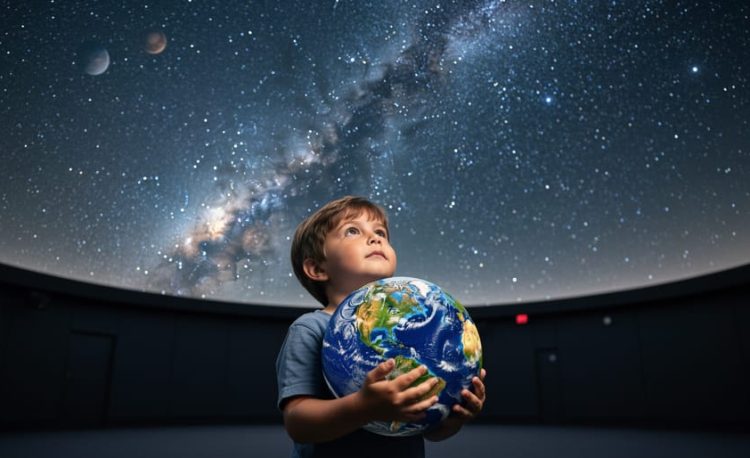
Yes, Earth is in space! Space is the huge, mostly empty area that stretches out in every direction beyond our planet, and Earth is floating right inside it, like a marble drifting in the biggest room you can imagine.
Right now, you’re sitting on a giant ball that’s spinning and zooming around the Sun. Can you feel it moving? Probably not! That’s because Earth travels so smoothly, and its gravity keeps everything, including you, snug on the ground.
So where does Earth end and space begin? And what’s floating out there with us? In this article, we’ll explore how Earth moves, what lives in our space neighborhood, and why knowing this matters. We’ll even try a few fun activities along the way. Ready to blast off?
What Does It Mean to Be “In Space”?
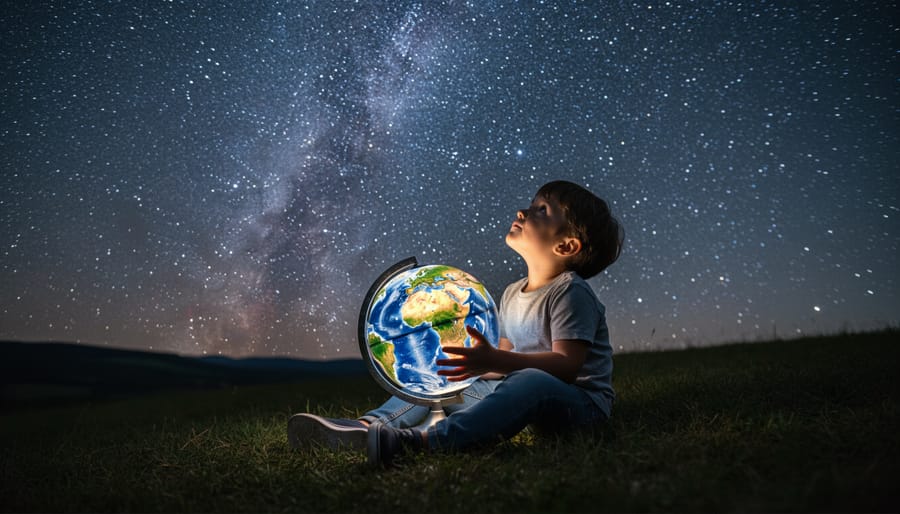
Space is the huge, mostly empty area that holds planets, stars, and moons. Think of it like a giant, quiet room with a few very big things floating in it. Earth is one of those things!
Here’s the part that surprises a lot of kids: Earth isn’t sitting on anything. There’s no table, no shelf, and no giant pair of hands holding it up. Earth floats in space, just like the Moon and all the other planets do. The ground under your feet is part of a giant ball that’s drifting along, and you’re riding on it right now.
Lots of people think space is only “up there,” far away past the clouds. But if you could zoom out from your backyard, you’d see that Earth is surrounded by space on every side. Up, down, left, right, it doesn’t matter which way you look. We don’t have to go anywhere to be in space, because we’re already here. Rockets don’t take astronauts to space so much as they take them to a different spot within it.
Let’s do a quick check. Imagine you’re holding a marble and let it go in the middle of a huge empty room, and it just hangs there. Is that marble sitting on something, or floating? That’s a bit like Earth! What do you think?
How Earth Floats and Moves Through Space
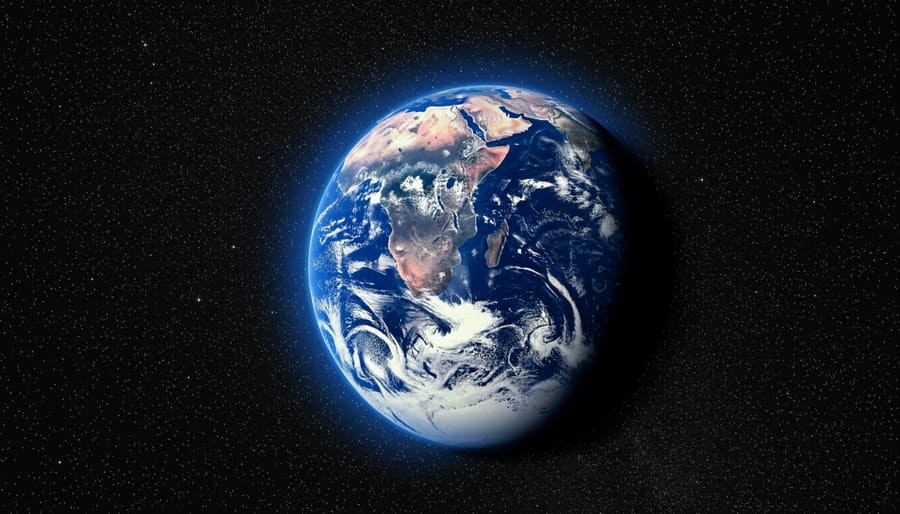
Earth doesn’t sit on anything, and it never falls down. So how does it stay up? It’s all about gravity and motion.
The Sun is super heavy, and its gravity pulls on Earth like an invisible rope. But Earth is also zooming forward really fast. Think of swinging a ball on a string around your head. The string pulls the ball in, but the ball’s speed keeps it moving in a circle instead of dropping. Earth does the same thing around the Sun. We call that path an orbit.
Earth also spins, kind of like a top or a merry-go-round. When your part of Earth faces the Sun, it’s daytime. When it spins away, it’s nighttime. One full spin takes about 24 hours, which is one whole day!
Here’s a quick way to remember Earth’s big moves:
- Spinning gives us day and night.
- Orbiting the Sun takes one year to complete.
- Tilting a little as it travels helps make the seasons.
Want to see it for yourself? Try this fun experiment. Grab a flashlight and a ball. Ask a friend to hold the flashlight steady, which is your Sun. Now slowly turn the ball, which is your Earth. Can you spot the lit side and the dark side? Put a small sticker on the ball to be “you.” Watch how your sticker moves from light to dark as the ball spins.
Now try walking the ball in a big circle around the flashlight while it spins. That’s Earth doing both jobs at once! Which part do you think is harder to keep going, the spinning or the circling? Give it a try and see!
Where Does Earth’s Space Neighborhood Begin and End?
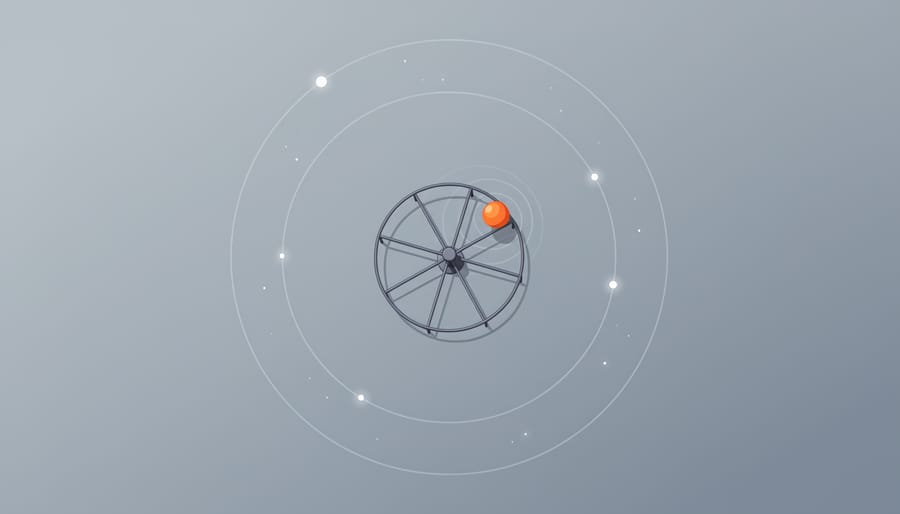
Let’s zoom out, one stop at a time, and see how far Earth’s space neighborhood stretches!
Stop 1: The atmosphere. This is the blanket of air hugging our planet. It’s the air you breathe, and it slowly gets thinner as you go up until there’s almost nothing left. Scientists who study physical geography learn about this air layer, too. What do you think is next?
Stop 2: The Moon. Our closest neighbor circles Earth, and it’s about 384,000 kilometers away. That’s close for space! Can you spot it in the sky tonight?
Stop 3: The Sun and the other planets. Earth is one of eight planets that travel around the Sun, together called the solar system. Mars, Jupiter, and Saturn are some of Earth’s neighbors. Which planet would you visit first?
Stop 4: The Milky Way. Our whole solar system sits inside a giant spiral of stars called a galaxy. It holds hundreds of billions of stars, and the Sun is just one of them. Wow, right?
Here are some handy words to remember on your trip:
- Atmosphere
- The blanket of air wrapped around Earth that we breathe and that keeps us cozy.
- Orbit
- The curved path one object takes around another, like Earth circling the Sun.
- Solar system
- The Sun and everything that travels around it, including planets and moons.
- Galaxy
- A giant family of stars, gas, and dust held together in space.
- Gravity
- An invisible pull that keeps things together, like the Moon near Earth and Earth near the Sun.
So where does Earth’s neighborhood end? It doesn’t have a fence! It just keeps getting bigger, from the air around us to a whole galaxy. Pretty amazing for a little planet, isn’t it?
Why Knowing Earth Is in Space Helps Us Every Day
Knowing that Earth floats in space isn’t just a cool fact. It explains stuff you see every day! Because Earth spins, we get day and night. Because it travels around the Sun with a tilt, we get seasons, and a calendar is really just a way of counting those trips. Satellites orbiting high above us send back pictures for weather forecasts, help our phones find maps, and carry signals for calls. And astronauts? They live and work in space on the International Space Station, floating around as they do experiments. Even a globe makes sense now: it’s a little model of our ball floating in space. If you want to dig deeper, our reference tables are a handy place to look things up.
Want to try it? Teachers and parents can do an “orbit walk” in the playground: one child is the Sun standing still, and another walks a big circle around them as Earth, spinning slowly while they go. For seasons, shine a lamp in a dim room and tilt a globe near it. Watch which part gets the most light as you move around the lamp!
Why don’t we feel Earth moving?
Earth moves very smoothly, and everything on it, including the air, moves along with us. It’s like riding in a car on a smooth road: you don’t feel the speed unless it bumps or turns suddenly.
Why don’t we fall off Earth?
Gravity pulls everything toward the middle of Earth, so “down” always means toward the ground, wherever you stand on the planet.
Is the sky part of space?
The sky is the blanket of air around Earth, called the atmosphere. Space begins where that air gets very, very thin and then fades away.
How fast is Earth moving?
Earth zooms around the Sun incredibly fast, much faster than any car or plane. We don’t notice because we’re all traveling together!
So the next time you look at a globe or a weather map, remember: it all starts with Earth floating in space. What would you like to spot from up there?
So, is Earth in space? Yes, it really is! Our planet floats in space all the time, spinning like a top and traveling around the Sun, and we get to ride along. You, your school, your pets, and even your favorite playground are all part of the journey.
Here’s the big idea to remember: space isn’t only “up there” far away. Space is all around Earth, and Earth is right in the middle of it, held in place by gravity.
Want to keep exploring? There’s so much more to discover! Check out our Earth science guide to learn even more about our planet and what’s beyond it. Then browse the rest of our Earth and Space Facts collection and try a related quiz on the site to see what you’ve learned. You could even grab a flashlight and a ball and show a friend how day and night happen!
The best explorers never stop asking questions. Why does the Moon change shape? How far away are the stars? Every question is a new adventure waiting for you.
So here’s one last puzzle to think about tonight: when you look up at the stars, what do you wonder is looking back at us?