The Earth’s crust is the thin, rocky outer layer of our planet, and it’s full of surprises. It’s thinner than you’d guess, it comes in two kinds, it’s broken into giant puzzle pieces, and it’s slowly moving right under your feet. Those facts, plus mountains, volcanoes, earthquakes, and rocks you can actually hold, make up our list of seven.
We picked each fact because it’s surprising, easy to picture, and fun to share. Every one comes with a comparison to something you already know, so you can imagine it without a science degree. If you’ve ever wondered what’s beneath your sneakers, you’re in the right place. This is a perfect starting point for exploring physical geography the study of the land, water, and landforms that shape our world.
Ready to play? Try this: look at an apple, then guess how our planet’s crust compares to it. We’ll reveal the answer in fact number one!
How We Picked These Crust Facts for Curious Kids
Before we jump into the facts, let’s talk about the word “crust.” Think of the crust on a loaf of bread or the skin on an apple. That’s the outside layer you see first. The Earth’s crust is the same kind of thing: the thin, rocky outer layer we walk, play, and build on every day.
So how did we pick these seven facts? We looked for ones that are surprising, easy to picture in your head, and backed by real science. We also wanted facts that are fun to share with friends, parents, and teachers, the kind that make someone say, “Wait, really?” Each one comes with a comparison or a little activity, so you can try it out yourself.
Ready to see how many you can get? Let’s dig in.
7 Fun Facts About the Earth’s Crust
1. The Crust Is Thinner Than You Think, Like an Apple’s Skin
Imagine biting into an apple. Do you taste the skin? Hardly! Now guess: if Earth were an apple, how thick would its crust be? Pretty thin, right? That’s the answer. The crust is Earth’s rocky outer skin, and it’s incredibly thin compared to the whole planet. It makes up less than one percent of Earth’s radius which is the distance from the surface to the very center. Here’s a quick snapshot of Earth’s layers:
- Crust: our thin, rocky skin, where we live.
- Mantle: hot rock that moves very, very slowly.
- Core: the super-hot center of the planet.
So every playground, mountain, and beach you’ve ever visited sits on that paper-thin layer. Pretty amazing, isn’t it?
2. There Are Two Kinds of Crust: Land and Ocean Floor
Here’s a twist: the crust comes in two flavors! Scientists call them continental crust and oceanic crust.
Continental crust is the part under all the land, like your backyard, your school, and even the tallest mountains. It’s the thick one, usually around 30 to 40 kilometers deep, and it’s lighter, a bit like a big, puffy marshmallow floating on top.
Oceanic crust hides under the seas. It’s thinner, only about 5 to 10 kilometers thick, but it’s heavier and denser, more like a smooth, heavy cookie sheet.
Because the light, puffy land crust sits higher and the heavy ocean crust sits lower, we get dry land and deep ocean basins. Neat, right?
So, which one do you think we live on? Take a guess before you read on!
3. The Crust Is Broken Into Giant Puzzle Pieces
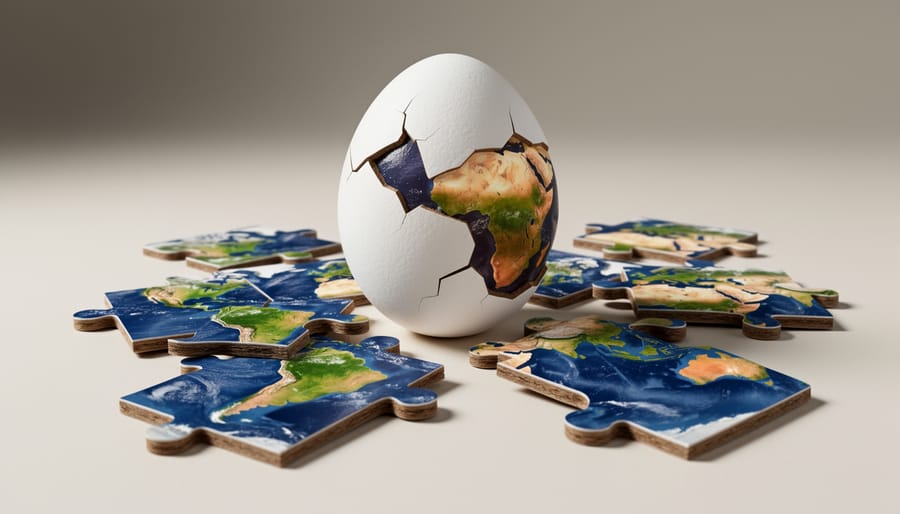
Here’s a surprise: the Earth’s crust isn’t one solid, unbroken shell. It’s cracked into huge slabs that fit together like a giant jigsaw puzzle wrapped around our planet. Scientists call these slabs tectonic plates (say it like “tek-TON-ik”). That’s just a fancy name for the big pieces of crust.
Some plates are enormous and hold whole continents. Others are smaller, and many sit under the ocean. Together they cover the entire globe, with no gaps.
And here’s the twist: the pieces don’t stay still. They creep along very slowly, nudging into each other, sliding past, or pulling apart.
Try this at home! Gently tap a hard-boiled egg on the counter until the shell cracks all over, but don’t peel it. Now wiggle the shell pieces with your fingers. Those are your plates! No egg handy? A regular jigsaw puzzle works too. Can you spot where two pieces meet?
4. The Crust Moves, About as Fast as Your Fingernails Grow
Here’s a surprising secret: the ground under your feet is moving right now! Don’t worry, you can’t feel a thing. Earth’s giant puzzle pieces creep along so slowly that you’d never notice.
How slowly? Scientists say the plates move an inch or two a year. That’s about the same speed your fingernails grow! If you trim your nails every few weeks, you’re watching a tiny version of plate movement happen on your own hands.
Slow movement adds up over a very long time. Imagine a snail that never stops walking. Day after day, year after year, it travels farther than you’d ever guess. The plates are like that snail, only they’ve been walking for millions and millions of years.
Here’s the really cool part. A long, long time ago, the continents weren’t spread out like they are on a map today. They were squished together in one giant landmass, like a gigantic jigsaw puzzle snapped shut. Over millions of years, the pieces slowly drifted apart until they landed where they are now.
Next time you look at a globe, check out South America and Africa. Do their edges look like they could fit together? Give it a try!
Now put on your thinking cap. If the plates keep creeping along, what might our map look like millions of years from now? Will oceans get bigger or smaller? Could two continents bump into each other? Grab some paper and draw your best guess!
5. Mountains Are Born When the Crust Pushes Together
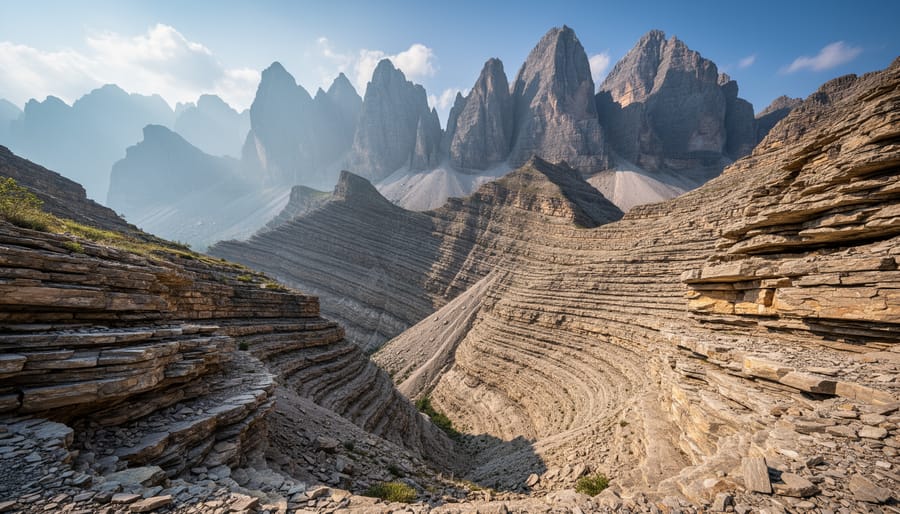
Here’s how mountains get made: when two pieces of the crust push toward each other, the land between them has nowhere to go but up.
Try it yourself! Lay a rug on the floor and slowly push one edge toward the other. See those wrinkles popping up? Or squeeze two sheets of paper together on a table and watch the middle fold into little ridges. The crust does something very similar, only much, much slower and with giant slabs of rock.
Some of the tallest mountain ranges on Earth, like the Himalayas, grew this way over millions of years. They’re still growing today, just a tiny bit at a time.
Can you guess which famous mountain range you’d most like to visit? Maybe one with snowy peaks, or one with lots of hiking trails? Tell a grown-up or a friend your pick!
6. Volcanoes and Earthquakes Happen Where Crust Pieces Meet
Have you ever wondered where volcanoes and earthquakes like to show up? Most of them happen near the edges where the crust’s puzzle pieces meet. Think of it like the seams on a soccer ball, where the pieces fit together and sometimes rub, bump, or slide past each other. That’s where the ground can wiggle, shake, or let hot melted rock escape.
There’s a famous ring of these spots around the Pacific Ocean called the Ring of Fire. It isn’t a real fire, it’s just a nickname for a huge circle where lots of volcanoes sit. Scientists who study seismic activity keep a close eye on it, which helps people stay safe and prepared.
Your turn: grab a map or globe and trace the Ring of Fire with your finger. Which countries does it touch?
7. The Crust Is Made of Rocks and Minerals You Can Hold
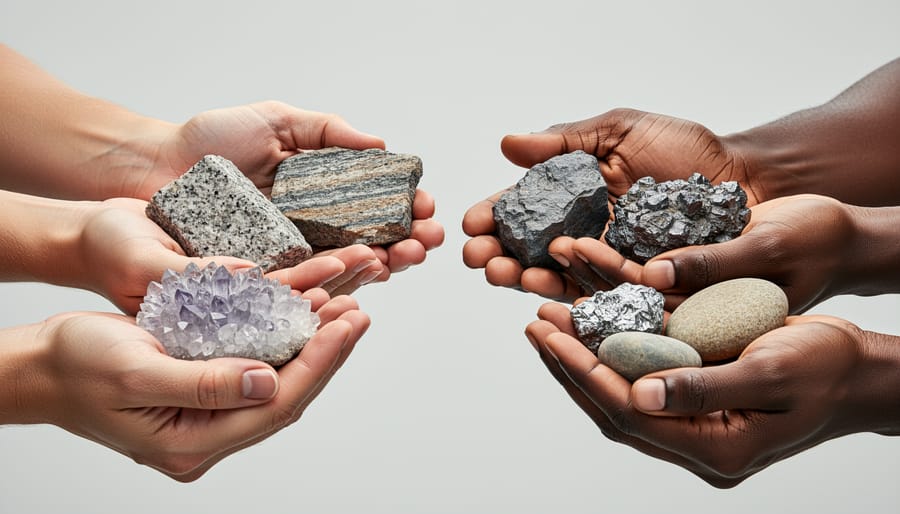
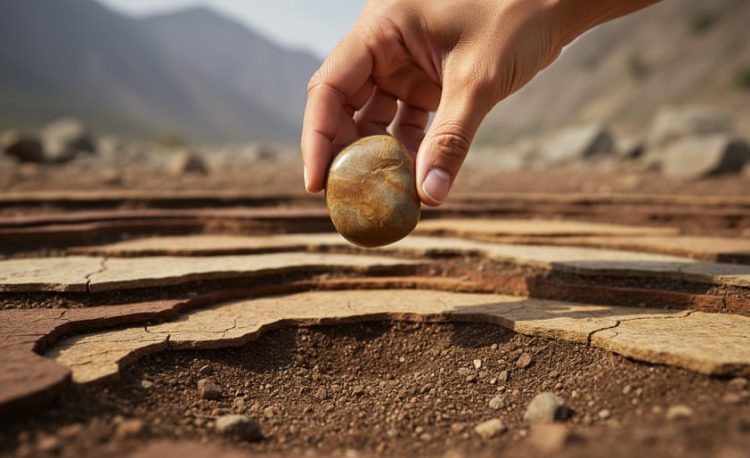
Here’s the best part: you can hold the crust in your hands! The crust is made of rocks and minerals, and you probably walk past them every day. Granite is a speckled rock often found in mountains and sometimes in sidewalks and countertops. Basalt is a dark, heavy rock that forms when lava cools, and you can find it in many places, especially near old volcanoes and the ocean floor.
Ready for a mission? Grab a bag and go rock hunting in your backyard or a nearby park. Look for rocks that are smooth, rough, shiny, or sparkly. Then sort your finds by color or texture. Which pile is the biggest?
And here’s a fun twist: the ground under a playground is part of the crust too!
Crust Questions Kids (and Grown-Ups) Often Ask
What is the crust made of?
The crust is made of rocks and minerals, like granite under the land and basalt under the oceans. Think of it as a giant layer of stone that covers our whole planet.
Can we dig through the crust?
Not even close! The deepest hole ever drilled only scratches the surface, because it gets very hot and tricky to dig deeper. So nobody can tunnel all the way through, no matter how big the shovel.
Does the crust ever stop moving?
Nope, the crust’s puzzle pieces keep drifting very, very slowly, all day and all night. You can’t feel it happening, but over millions of years it moves whole continents.
Why do some places have more earthquakes than others?
Most earthquakes happen near the edges where crust pieces meet and bump or slide past each other. Places far from those edges usually feel far fewer shakes.
Got a question that isn’t on this list? Great! Asking questions is exactly how scientists get started. Parents and teachers, you can turn these four into a quick quiz at dinner or in class, and see who in the family gets the most answers right.
Here’s a fun bonus for curious minds: the rocks in the crust hold clues about our planet’s past. Some of those clues are even connected to volcanoes. If you want to see how fiery eruptions can help preserve ancient life, take a peek at these volcano fossils. Which question surprised you most? Pick one, and see if you can explain the answer to a friend in your own words.
Your Crust Adventure Continues: Quick Takeaways and Next Steps
You just took a trip through the thin, rocky skin of our planet! The crust is as thin as an apple’s peel, it’s cracked into giant puzzle pieces that creep along as slowly as your fingernails grow, and it pushes up mountains and rumbles with volcanoes where those pieces meet.
Now it’s your turn to explore. Grab a puzzle, a cracked hard-boiled egg, or a few rocks from the park and see the crust in action. Then test your brain with a Fundamentals Of The World quiz and find out how many facts stuck. Keep the curiosity going with more of our Earth Fun Facts, because there’s so much more to discover under your feet.
Parents and teachers, try turning these seven facts into a game! Take turns guessing, hold a rock-sorting contest, or build a “continent puzzle” together. Learning is always better when it’s play.