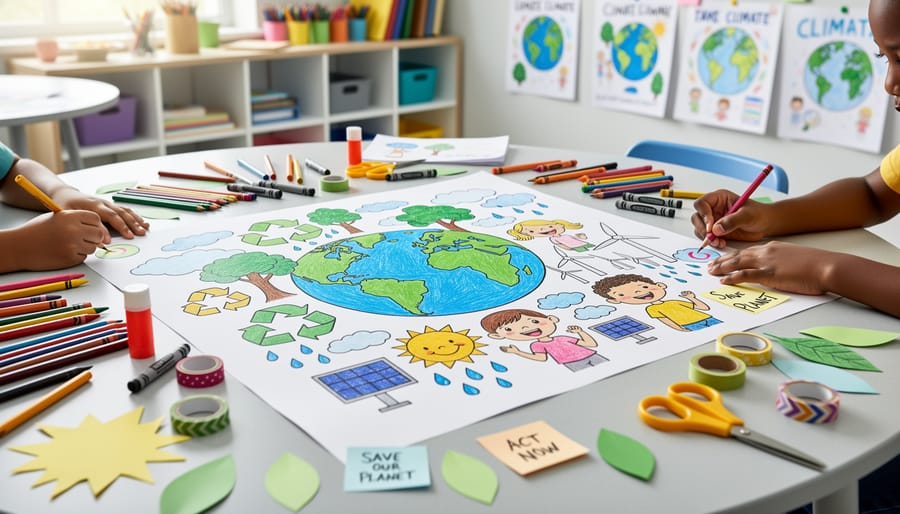
A great climate change poster takes about an hour and just a few supplies: a big headline, one clear message, and bold pictures that show the problem and a way to help. Start with a simple idea, like “Our Planet Is Getting Warmer” or “Small Actions, Big Change,” then sketch it, add color, and keep the words short so everyone can read it from across the room.
Why does this work? Posters are like billboards for your brain. People only look for a few seconds, so one strong picture and a few punchy words win every time.
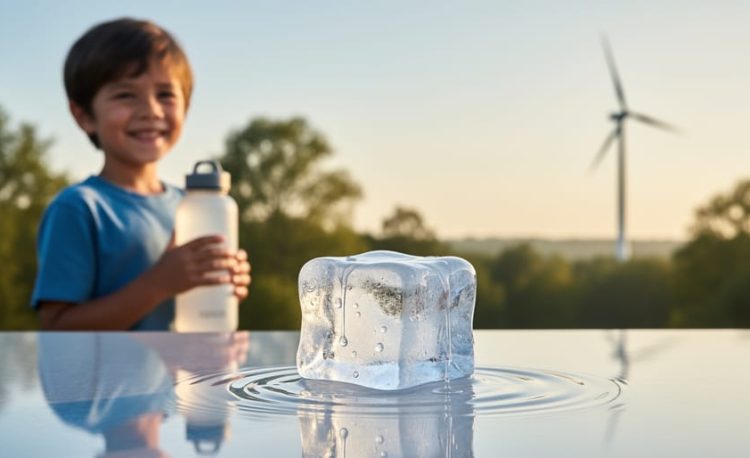
Climate change means Earth’s weather patterns are shifting because our planet is slowly heating up. Can you think of one thing you could draw to show that? Maybe a melting ice cube, a sad polar bear, or a sunny wind turbine?
In this guide, you’ll find kid-friendly explanations, step-by-step poster tips, and playful activities for home or the classroom. There’s also a quick look at the CMOS Sustainability Poster Contest for 2026, which is open to CMOS members and offers a first prize of CAD $1,000 and a second prize of CAD $500.
Ready to grab your markers?
What Is Climate Change? A Simple Explanation for Young Explorers
Ever wonder why it snowed on Monday but felt warm on Friday? That’s weather. It changes from day to day, even hour to hour. Climate is different. It’s the usual pattern of weather in a place over many, many years. Learning about weather vs climate is the first step to making a great poster.
Here are a few words that will help you along the way:
- Weather
- What the air outside is doing right now, like rain, wind, or sunshine.
- Climate
- The kind of weather a place usually has over a long, long time.
- Greenhouse gases
- Gases in the air that trap heat, a bit like a blanket around Earth.
- Sustainability
- Taking care of our planet today so there’s enough for everyone tomorrow.
Picture Earth wearing a cozy blanket. A little blanket keeps us warm, which is great! But when people burn lots of fuel for cars and factories, extra greenhouse gases make the blanket thicker. Then the planet gets too warm.
A warmer Earth changes the places we study in geography. Glaciers on mountains melt, so rivers can get wild or run low. Oceans warm up and rise. Animals like polar bears and coral fish have to find new homes.
Think about it: which place on the map would you want to protect most, a mountain, a river, or an ocean?
A tip for parents and teachers: keep the talk hopeful. Kids feel braver when they hear about problems alongside things they can do, like saving energy or planting trees. A poster is a perfect way to turn worry into action!
Why Posters Are a Super Way to Share Big Ideas
Have you ever noticed how a single picture can say more than a whole page of words? That’s the magic of a poster! When you make one, you get to draw, think like a scientist, explore geography, and write a catchy line, all at the same time. It’s four subjects in one big, colorful adventure.
Posters also help kids show what they already know. Maybe you’ve learned about rivers and climate and how a warming planet can change the water in a river. A poster gives you a way to explain that idea to your classmates without giving a long speech. Pictures do much of the talking for you.
And here’s the best part: a poster gets people chatting. Hang one in the hallway or on the fridge, and someone is bound to stop, look, and ask, “What’s this about?” Suddenly you’re teaching your teacher, your parents, or your little brother.
Think of it as a creative game instead of homework. There’s no test and no wrong answer, just your ideas coming to life with markers, crayons, and imagination.
Can you spot the message? Think of a poster you’ve seen at school, at the library, or in your neighborhood. What did it say? Did the picture or the words catch your eye first?

How to Make Your Own Climate Change Poster, Step by Step
Pick Your Big Idea
Every great poster starts with one big idea. Not five. Just one! A poster shouts best when it has a single clear message.
So, what is the one thing you want people to remember about our planet? Close your eyes and picture a place you love. Maybe it’s a sparkly river, a snowy mountain, or a forest full of animals. Now ask yourself: how could I help protect it?
Here are some idea starters to get you going:
– Save energy: turn off lights when you leave a room.
– Protect the oceans: keep plastic out of the sea.
– Plant trees: forests are cozy homes for animals.
– Protect glaciers and mountains: icy peaks need our care.
– Keep rivers clean: every drop matters downstream.
Grown-up helpers, you can jot every idea on sticky notes and let your child vote for a favorite!
Plan, Draw, and Add Your Words
Ready to plan your poster? Grab a blank sheet and a pencil, because the planning part is the fun part. First, imagine your poster as a little stage. What’s the star of the show? Put that big picture right in the middle, then decide where your words will go.
Here’s an easy path to follow:
- Choose one message you care about, like saving energy or protecting animals.
- Sketch your big picture lightly in pencil, using simple shapes.
- Add color with bold markers or paint so it can be seen from across the room.
- Write a short slogan along the top or bottom.
- Add a “what you can do” idea, such as turning off lights or trying some recycling ideas.
- Share your poster with your class, family, or neighbors.
Wondering what a slogan is? It’s just a short, catchy phrase that sticks in your head, like a mini song lyric. “Cool Earth, Happy Planet!” is one example. Can you make one rhyme?
Here’s the best part: there is no wrong way to make a poster. Wobbly lines, silly colors, and unusual ideas are all welcome. Your poster is yours, so let your imagination lead the way!
Poster Power-Ups: Make It Pop
Ready to make your poster pop? Try these quick power-ups!
Go big with your letters. Can someone read your words from across the room? If not, make them bigger! A short slogan in thick, chunky letters beats a long sentence in tiny writing every time.
Pick just a few bright colors. Three or four is plenty. Too many colors can make a poster feel messy, like a box of crayons that tipped over.
Leave some open space. Empty spots give the eyes a place to rest, so your best pictures and words can shine.
Here’s a fun twist: use recycled materials! Cut up old magazines, cardboard, or scrap paper for your pictures. Your poster can show the message and live it too.
Step back and peek at your poster from far away. What jumps out first?
Play and Learn: Poster Activities for Home and Classroom
Ready to turn poster-making into a game? Here are four play-based ideas for home or the classroom.
Gallery Walk. Hang all the posters on a wall, then let everyone stroll past like visitors in a museum. Give each person three sticky notes. They leave a kind comment on posters that made them think. Ask aloud: “Which poster made you say ‘wow’? Why?”
Slogan Challenge. Set a timer for two minutes. Can you invent the catchiest slogan about saving energy, protecting oceans, or planting trees? Try rhyming, or make it so short it fits on a bumper sticker. Everyone shares their slogan out loud, and the group claps for their favorites.
Map Poster Adventure. Draw or print a big world map. Kids place stickers on spots where climate change is changing things, like melting glaciers, shrinking rivers, or warmer oceans. Then add little drawings and a title. Ask: “Which place on our map would you most like to help?”
Conversation Spinner. Write questions on slips of paper and pull one from a hat. Try “What is one small thing our family could do this week?” or “How would an animal feel about a warming planet?” Take turns answering, and remember there are no wrong answers.
Grown-ups, keep the mood hopeful. Ending each activity with “What can we do?” helps kids feel like problem-solvers instead of worriers.
A Peek at a Real Poster Contest: CMOS Sustainability Poster Contest
Did you know grown-ups make climate posters too? The Canadian Meteorological and Oceanographic Society (CMOS) is inviting entries for its 60th Congress Poster Contest, and the 2026 Sustainability Poster Contest is open right now. It’s a great peek at how posters help people share climate and ocean science.
Here are the key details at a glance:
| Detail | What to know |
|---|---|
| Organizer | CMOS |
| Contest | 60th Congress Poster Contest / 2026 Sustainability Poster Contest |
| Who can enter | CMOS members |
| First Prize | CAD $1,000 |
| Second Prize | CAD $500 |
| Deadline and location | Check the official CMOS page |
This contest is open to all CMOS members, so it’s for grown-up members rather than a kids’ entry. Parents and teachers, you’ll want to read the official details yourself. For the submission deadline and the location, head to the organizer’s page and see their CMOS poster contests information.
Even though kids can’t enter this one, they can still be inspired by it. Why not make your own poster for a class showcase or a family display night? So, what would your prize-winning poster say?
Quick Questions About Climate Change Posters
What should a climate poster include?
One clear message, a big picture that shows it, and a short slogan. That’s it! Think of it as a quick story people can understand in a few seconds.
Do I need to be good at drawing?
Not at all. Stick figures, bold shapes, cut-out magazine pictures and even photos all work great. What matters most is your idea, not how fancy your art looks.
How do I keep the topic hopeful for young kids?
Focus on things we can do, like planting trees, saving energy or picking up litter, instead of only the scary parts. Ask, “What’s one helpful thing you could show?” and let them lead the way.
Can a class make one together?
Absolutely! Give each child a small piece, such as one drawing or one word of the slogan, and join them into one giant poster. Everyone gets to share a part of the message.
Which colors work best?
Pick two or three bright colors that stand out from each other. Dark letters on a light background are easy to read from across the room.
How long should my slogan be?
Try for just a few words. Short slogans are catchy, and they stick in people’s minds!
So there you have it! A climate change poster turns big ideas into creative action. With some paper, a few colors, and one clear message, you can help people see our amazing planet in a new way.
Remember, every small idea counts. Maybe your poster shows a glacier, a river, or a tiny animal that needs a safe home. Even a simple slogan can make someone stop, smile, and think. And grown-ups keep sharing climate ideas through posters too, so you’re in great company!
Ready to give it a try? Grab your markers, gather your family or classmates, and start sketching. When you want more fun, come back and explore our geography quizzes and activities to learn even more about the places and creatures you’re protecting.
So, what will your poster say to the world?