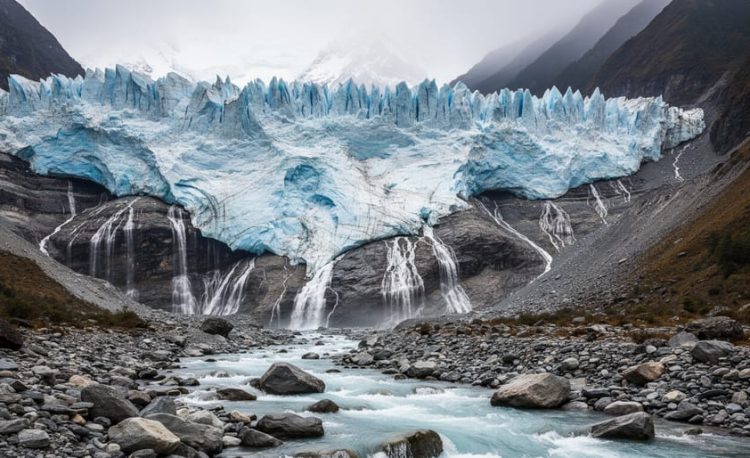
Meltwater streams flowing from a Himalayan glacier into a rocky river valley, illustrating glacier melting and flood risk.

UN Climate Change Announcement News Update: What Changed and What to Watch in 2026

On August 31, 2026, the UN Climate Chief issued a written statement about glacial collapse and flooding in the Himalayan region, bringing fresh attention to how quickly our planet’s ice is disappearing and what that means for people living nearby. This announcement is one of many ways the United Nations talks to the world about climate change, a big problem where Earth is getting warmer because of pollution and gases humans put into the air.
Think of the UN like a huge group of countries working together to solve world problems. When glaciers (giant rivers of ice high up in mountains) start melting too fast, it can cause floods that wash away homes, farms, and roads. The UN wants everyone to know what’s happening so we…
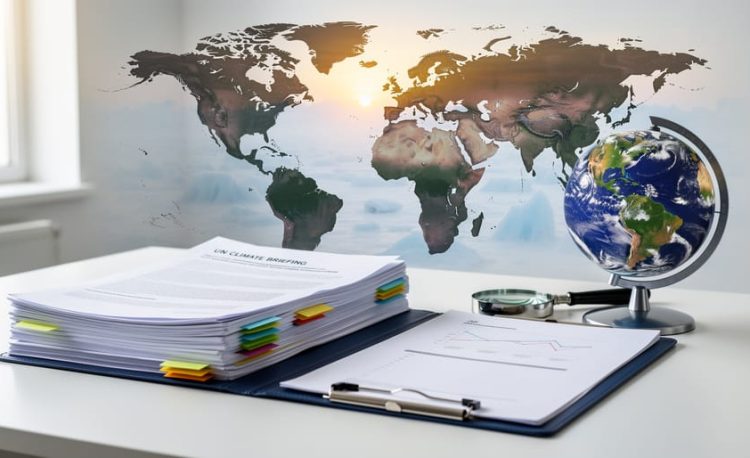
Climate briefing folders and a globe on a desk, photographed in soft light to suggest UN climate reporting and Earth’s changing climate.

What the UN Climate Report Tells Us About Our Changing Planet

UN climate reports are official documents prepared by scientists from around the world to help us understand how our planet’s climate is changing and what we can do about it. The most important reports come from the Intergovernmental Panel on Climate Change (IPCC), a special group created by the United Nations in 1988 to gather and review climate science without doing its own experiments. Instead, thousands of scientists read through existing research and summarize what we know about rising temperatures, melting ice, changing weather patterns, and how humans are affecting Earth’s climate.
These reports don’t tell governments exactly what to do, but they do explain what’s happening to our planet right now. …

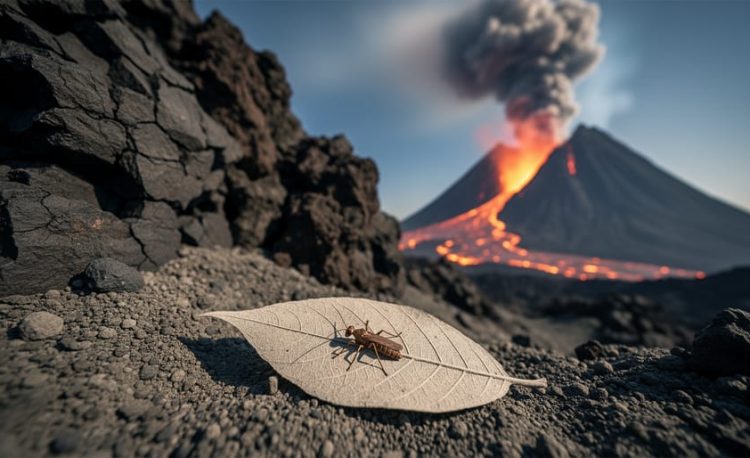
A fossilized leaf and insect preserved in volcanic ash near basalt rocks, with a distant erupting volcano plume in the background.

3 Volcano Facts About How Volcanoes Help Create Fossils

Volcanoes create fossils in three surprising ways: by burying ancient life in ash, forming volcanic rock molds of plants and animals, and building new rock layers that help scientists figure out how old fossils really are. These fiery mountains might seem like destroyers, but they’re actually some of nature’s best fossil-makers! When a volcano erupts, it can freeze moments in time, protect delicate traces of life, and give us clues about creatures that lived millions of years ago.
Have you ever wondered how a fiery explosion could help preserve something as fragile as a leaf or an insect? The secret is in how quickly volcanic materials work. Think of it like making…

Delegates gathered in a conference room around a globe model, representing global teamwork to address climate change under changing storm-to-sunlight skies.

How the United Nations Fights Climate Change Around the World

The United Nations tackles climate change by bringing countries together to make agreements, track their progress, and share money and knowledge to protect our planet. Think of the UN as the world’s teamwork coach for climate action. Countries meet regularly at big conferences, report what they’re doing to reduce pollution, and help each other solve problems like rising temperatures and wild weather.
So how does this global teamwork actually happen? The UN runs annual climate conferences where leaders from nearly every country gather to make plans. In 2026, one of these important meetings will take place in Antalya, Turkey, where nations will share their climate stories and commitments. Countries like Canada show up …

Panoramic landscape showing rugged mountains, a winding river valley, and an ocean coastline under a cloudy sky.

Physical Geography Features That Shape Our Amazing Planet

Physical geographical features are the natural landforms and bodies of water shaped by Earth’s forces over millions of years, including mountains, rivers, valleys, oceans, and deserts. These features form the incredible landscape around us and influence everything from weather patterns to where people build their homes.
Have you ever wondered why some parts of the world have towering mountains while others are flat as a pancake? Or why certain rivers wind like snakes while mountains rise straight up? Understanding physical geography helps answer these questions and reveals the amazing story of how our planet works.
Every time you climb a hill, splash in a stream, or build a sandcastle at the beach, you’re …

“Melting glacier ice in the foreground with storm clouds and ocean in the distance, illustrating warming-related climate impacts.”

Global Warming vs. Climate Change: What’s the Real Difference and When to Use Each

Global warming and climate change aren’t the same thing, even though people often swap the terms. Global warming is the simpler idea: it means Earth’s surface is getting hotter, mostly because humans are burning coal, oil, and gas. Climate change is bigger. It includes that warming plus all the changes that happen because of it, like melting glaciers, stronger storms, and longer droughts.
Why does knowing the difference matter? Because when you understand what each word really means, you can talk about our planet more clearly. Scientists use “global warming” when they’re talking specifically about rising temperatures. Right now, Earth is about 1°C warmer than it was …

Benefits of Having a Solar Flag Pole Light

The majority wonder why some people prefer to raise their flags overnight or even 24/7. Well, it may be because they just want to manifest their patriotism every day by raising their flags and waving them all day long. These 24/7 well-lit flag poles are especially applicable to educational institutions and government agencies that take pride in their patriotic governance.
There are days when mobility issues, forgetfulness, odd schedules, and convenience will compel them to keep their flags up and well-lit every day.  However, you cannot achieve this level of spontaneity and convenience without having a quality and fully functional solar flagpole light.
So …

Fun Facts about Rivers

Rivers usually start as a snow or a glacier melting from mountains. The water will be carried downhill because of gravity and after millions of years, the water has created a path which is then called – river.
Check out these interesting and fun facts about rivers. The famous rivers, events, recreational activities and other trivia will be introduced here.

The Nile river has a length of about 6650 kilometers which makes it the longest river in the world.
The Amazon River is the 2nd largest river with a length of about 6400 kilometers.
Fishing, bathing, transporting, swimming, rafting and for others, doing the laundry, are some of the activities you can do in the river.
The top 3…

10 Countries with the Highest Population

Find out the 10 countries with the highest population. These population statistics are taken from 2020 and are the latest one. Check out in which your country ranks and at the same time learn about population.
If in terms of population, the largest country in the world is China followed by India. These two countries are already having a population of over a billion. United States comes in 3rd rank with about 325 million residents. Brazil, Russia, India and China are expected to dominate the 21st century economy and something common of these 4 countries is that they are all part of the 10 most populous countries. This implies that population’s size is important in economic expansion.
However, …