
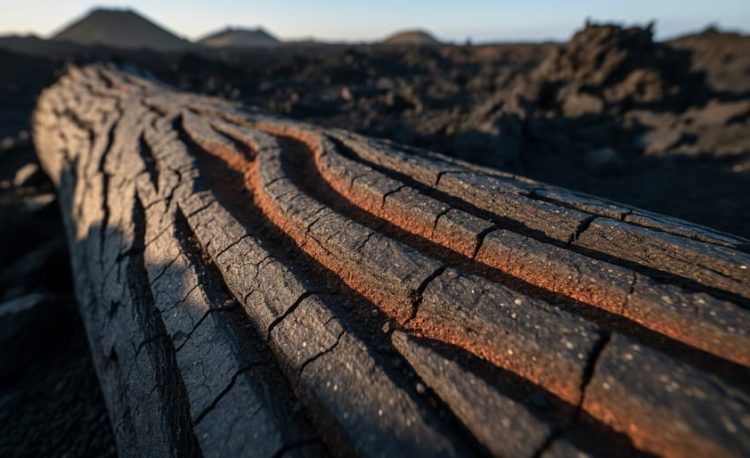
Lava fossils are imprints or molds left behind when molten lava flows over living things like trees, animals, or plants, preserving their shape in solid rock. Unlike regular fossils that form slowly over millions of years, lava fossils happen fast, capturing a moment in time when volcanic eruptions suddenly buried ancient life.
Have you ever made a handprint in wet sand or clay? Lava fossils work a bit like that, except the lava is incredibly hot and the “mold” it creates is permanent. When lava cools and hardens around an object, it can trap the exact shape and texture, creating a natural sculpture in stone.
These unusual fossils give scientists clues about what plants and animals lived near ancient volcanoes, how quickly volcanic eruptions happened, and what Earth’s environment looked like millions of years ago. Some lava fossils even show tiny details like tree bark patterns or the texture of leaves.
In this article, you’ll discover exactly how lava creates these special fossils, explore different types you might find around the world, and learn why scientists get so excited when they uncover these volcanic time capsules. Ready to see how fire and stone work together to preserve the past?
What Lava Fossils Really Are
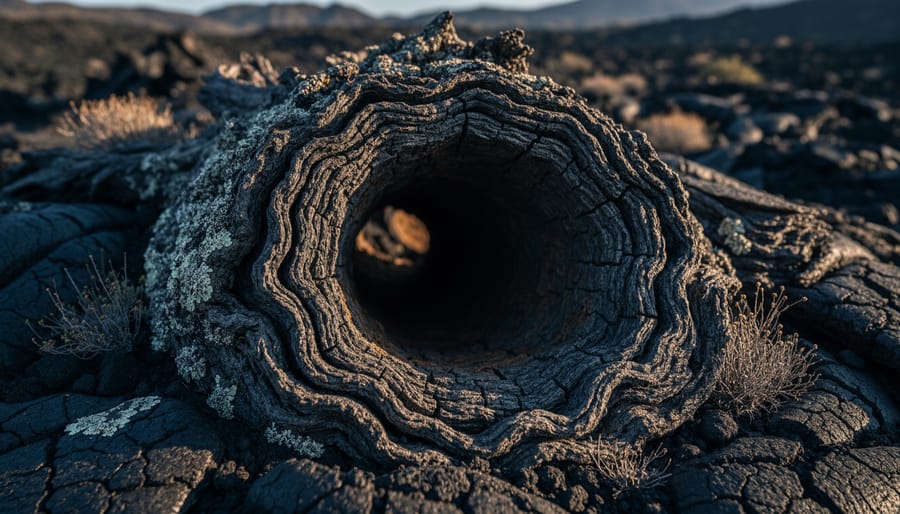
Lava fossils are nature’s surprise snapshots! They happen when hot, melted rock from a volcano flows over plants, animals, or objects and then cools and hardens around them. Unlike the fossils you might find in sedimentary rocks (those layer-cake rocks formed from mud and sand), lava fossils form quickly during volcanic eruptions.
Here’s how it works: imagine a tree standing in the path of a lava flow. When the super-hot lava touches the tree, it begins to burn away the wood. But before the tree completely disappears, the lava cools and hardens into solid rock. What’s left behind is a hollow tube or tunnel in the rock, shaped exactly like the tree trunk that used to be there. Scientists call this a tree mold, and it’s one of the most common types of lava fossils.
To understand lava fossils better, let’s look at some important terms:
- Lava fossil
- A preserved impression or hollow space in volcanic rock created when lava flows over and hardens around plants, animals, or objects. These form during volcanic eruptions and capture the exact shape of whatever the lava touched.
- Cast fossil
- A fossil formed when minerals fill in a hollow space left behind by a plant or animal, creating a solid copy of its shape. In lava fossils, this can happen when material later fills a tree mold or other hollow impression.
- Mold fossil
- The hollow impression left in rock after the original plant or animal has burned away or decomposed. Tree molds in cooled lava are perfect examples of this type of fossil.
- Volcanic rock
- Rock formed when lava from a volcano cools and hardens into solid stone. This rock can preserve impressions of whatever it flowed over during an eruption.
The coolest thing about lava fossils is how different they are from regular fossils. Regular fossils take thousands or even millions of years to form as layers of sediment slowly bury dead plants and animals. Lava fossils happen in just hours or days during a volcanic eruption, freezing a moment in time like a photograph made of stone.
How Volcanoes Create Lava Fossils
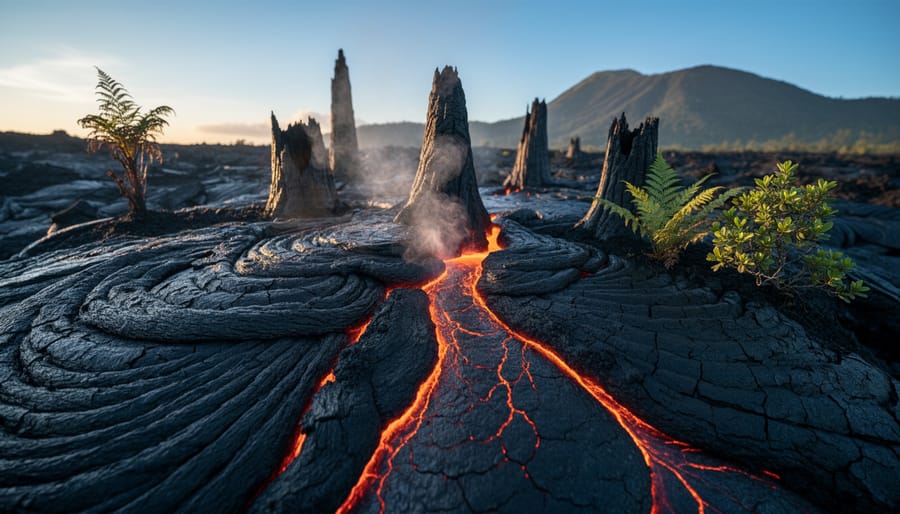
When a volcano erupts, it doesn’t just explode with a big boom. Rivers of super-hot melted rock called lava pour down the mountainside, flowing like thick orange syrup. This lava is so hot it can melt metal, but it’s about to do something amazing: freeze time itself.
Here’s how the magic happens. Picture a tree growing peacefully on the side of a volcano. When fresh lava flows toward it, the outside of the tree burns away instantly. But before the whole tree disappears, something incredible occurs. The lava touching the tree cools down just enough to harden into rock, creating a perfect mould around the tree’s shape. The inner part of the tree might turn to ash and blow away, leaving behind a hollow tube in the hardened lava that shows exactly where the tree once stood.
The same process works for anything caught in a lava flow. A creature’s footprint in wet volcanic ash, a fallen log, or even a bush can all become captured in time. The key is that the lava cools and hardens quickly enough to preserve the shape before everything burns completely away. Think of it like making a plaster cast of your hand in art class, except the “plaster” is molten rock that eventually turns to stone.
These volcano facts explain why not every lava flow creates fossils. The lava needs to be the right temperature and thickness, flowing at just the right speed. Too fast, and it destroys everything. Too slow, and objects burn away before the mould forms. When conditions align perfectly, we get these spectacular time capsules preserved in volcanic rock.
Different Kinds of Lava Fossils
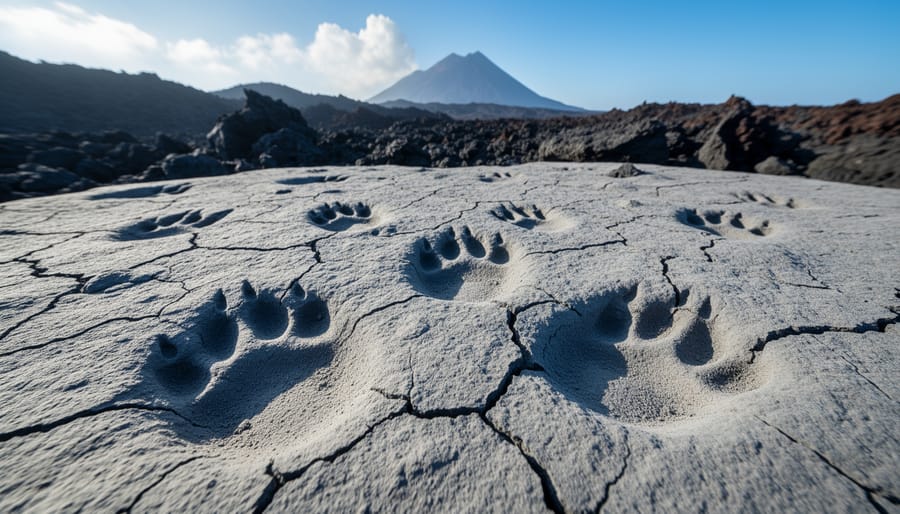
Lava fossils come in several amazing types, each preserving something different from the past. When volcanoes erupt and lava flows across the land, it can capture all sorts of things, trees, footprints, even entire animals, freezing them in time in unexpected ways.
Tree molds are some of the coolest lava fossils you’ll find. Picture a thick lava flow moving through a forest. When the hot lava surrounds a tree trunk, it starts to harden around the outside while the tree burns away on the inside. What’s left behind is a hollow tube in the rock shaped exactly like the tree that once stood there! You can actually walk up to these tree molds and peek inside them. Some are tall enough that you could crawl through them like a tunnel.
Footprint impressions happen when animals or people walk across freshly fallen volcanic ash before it hardens completely. The ash acts like wet cement, recording every detail of their steps. Later, when the ash solidifies into rock, those footprints become permanent records. Scientists have found ancient human footprints preserved this way, showing us how our ancestors escaped from volcanic eruptions thousands of years ago.
Body impressions form when lava or volcanic material flows over an animal too quickly for it to escape. The lava hardens around the creature’s body, and eventually the body decomposes, leaving behind a hollow space shaped exactly like the animal. Sometimes scientists can pour plaster into these cavities to create casts that show what the animal looked like.
Here are the main types of lava fossils you might encounter:
- Tree molds, hollow tubes in hardened lava where trees once grew, common in Hawaii and other volcanic forests
- Footprint impressions, preserved tracks in volcanic ash, found in places like Tanzania and Italy
- Body impressions, hollow spaces shaped like animals or people, famously discovered at Pompeii
- Plant imprints, leaf and stem patterns pressed into cooling lava, scattered across volcanic regions worldwide
Plant leaf imprints are delicate treasures. When a leaf falls onto cooling lava that’s still soft enough to take an impression, the leaf’s veins, edges, and texture get pressed into the surface like a stamp. Once the lava cools completely, the leaf might blow away or decay, but its perfect outline remains in the rock forever. These imprints show scientists which plants grew near ancient volcanoes and help piece together what those ecosystems looked like.
Each type of lava fossil tells its own story about a moment when fire and life met, creating a snapshot that lasts for millions of years.
Famous Places to Find Lava Fossils
Around the world, volcanoes have created amazing lava fossil sites that scientists love to explore. Each location tells a different story about Earth’s fiery past and the living things that once called these areas home.
Hawaii’s volcanic islands are probably the most famous spots for finding lava tree molds. When fresh lava flows through forests, it surrounds tree trunks and cools quickly on the outside while the wood inside burns away. What’s left are perfect tube-shaped holes in the hardened rock, showing exactly where trees once stood. You can visit Lava Tree State Monument on Hawaii’s Big Island to see these incredible hollow cylinders yourself. Scientists have learned that some ancient Hawaiian forests were completely different from today’s plants by studying these preserved shapes.
Pompeii in Italy is another remarkable location, though it’s famous for a sadder reason. When Mount Vesuvius erupted in 79 AD, volcanic ash buried an entire Roman city. The ash hardened around people and animals who couldn’t escape, preserving their exact positions. These aren’t true lava fossils since they formed from ash rather than flowing lava, but they work the same way. Archaeologists filled the hollow spaces with plaster to create casts showing people frozen in time, teaching us powerful lessons about physical geography and how volcanoes can change entire civilizations instantly.
Iceland also has fantastic lava fossil sites where scientists have found plant impressions and animal tracks in volcanic rock. These discoveries help us understand which creatures lived in cold volcanic regions thousands of years ago, fascinating country facts that show how volcanoes preserve secrets from long ago.
What Scientists Learn from Lava Fossils
Lava fossils are like time capsules that help scientists piece together amazing stories about Earth’s past. When researchers find a hollow tree mold in hardened lava, they can measure its size and shape to figure out exactly what kind of tree it was. This tells them which plants grew in that area thousands or even millions of years ago. If scientists discover lava fossils from trees that only grow in wet, rainy places, they know that location used to have a much wetter climate than it does today.
Animal footprints and body impressions frozen in volcanic rock work like detective clues too. By studying the size and shape of these prints, scientists can identify which creatures lived near ancient volcanoes. Sometimes they find footprints from animals that don’t live in that area anymore, which shows how animal populations have changed over time. These discoveries help us understand which animals were brave enough to live on volcano slopes and what they were doing right before an eruption happened.
The speed of volcanic eruptions is another mystery lava fossils help solve. When scientists find a perfectly preserved leaf print or an animal caught mid-stride, they know that lava or volcanic ash buried these things incredibly quickly. This detective work helps volcanologists understand how dangerous different types of eruptions are and how fast people would need to evacuate if a volcano became active today. Every lava fossil is a tiny puzzle piece that helps scientists build a bigger picture of our planet’s volcanic history.
Lava Fossils vs. Regular Fossils
Lava fossils form in a flash, while regular fossils take thousands or even millions of years to create. When hot lava flows over a plant or animal, it makes a fossil in just hours or days. Regular fossils happen when mud, sand, or silt slowly covers something, then hardens into rock over an incredibly long time.
The rocks are different too. Lava fossils are made of volcanic rock like basalt, which comes from cooled magma. Regular fossils form in sedimentary rocks like limestone, sandstone, or shale, which are made from layers of tiny particles that got squished together.
Lava fossils are much rarer than regular fossils. Most fossils you’ll see in museums are sedimentary fossils because oceans, rivers, and lakes cover more of Earth than active volcanoes do. Regular fossils also preserve actual bones or shells that turned to stone, while lava fossils usually show just the shape or outline of what was there. It’s like the difference between keeping your actual toy and keeping just a mold that shows where your toy used to be.
Questions Kids Ask About Lava Fossils
Can lava fossilize dinosaurs?
Probably not, because dinosaurs lived millions of years before many of the volcanoes we study today erupted. But lava could theoretically preserve dinosaur footprints if they stepped in volcanic ash that later hardened, though we haven’t found many examples of this.
How hot is the lava that makes these fossils?
Lava flows are incredibly hot, usually between 1,300 and 2,200 degrees Fahrenheit, much hotter than your oven at home! That’s hot enough to burn away most living things instantly, leaving only their shape behind in the cooling rock.
Could my footprint become a lava fossil?
If you stepped in soft volcanic ash before it hardened, and then lava flowed over it without completely melting the ash, your footprint could be preserved. But you’d need to get away from the volcano very quickly and safely, which is why we should always stay far from active eruptions!
Are lava fossils dangerous to touch?
Once the lava has cooled completely and turned into solid rock, lava fossils are totally safe to touch. They’re just regular rocks with interesting shapes inside or on the surface.
Do scientists find bones inside lava fossils?
Usually no, because the extreme heat burns away bones and other materials. What remains is typically a hollow space or an impression where the plant or animal once was, like a mold showing its shape.
Can you find lava fossils anywhere there’s a volcano?
Not always. The conditions need to be just right, the lava has to flow over something and cool quickly enough to preserve its shape. Some volcanoes create perfect conditions for lava fossils, while others don’t.
These questions show up in classrooms and museums all the time, right alongside other geography trivia that gets kids excited about Earth science. The best part? Each answer opens up new questions about how our planet works and what mysteries might still be hiding in volcanic rock.
Lava fossils show us something amazing: volcanoes, which can be so destructive, also have the power to freeze moments in time. When hot lava flows over plants, animals, or footprints, it creates a permanent record that can last millions of years. These special fossils give us glimpses into ancient forests, long-lost creatures, and events that happened in just seconds.
Every volcanic region around the world might hold more secrets waiting to be discovered. Imagine what else could be hidden inside hardened lava, perhaps the outline of a flower that bloomed thousands of years ago, or the impression of an animal we’ve never seen before. Scientists are still finding new lava fossils that teach us surprising things about Earth’s past.
Think about this: If you lived near a volcano long ago, what would you want to be preserved as a lava fossil? Maybe your favorite toy, a drawing you made, or even your handprint? What would you want future scientists to find and wonder about?
The story of lava fossils reminds us that even the most powerful forces of nature can become storytellers, preserving pieces of history in the most unexpected ways.