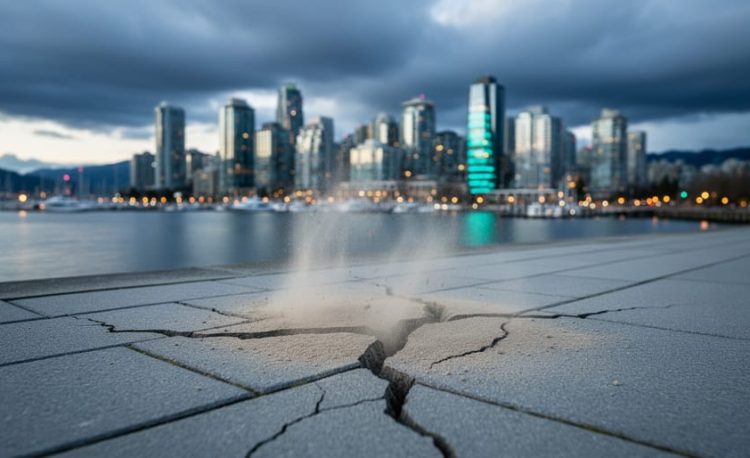
Seismic activity means shaking and movement in the ground caused by forces deep inside Earth, and Vancouver experiences this because it sits right next to a massive meeting point of huge pieces of Earth’s crust called tectonic plates. If you’ve felt the floor rumble under your feet or heard about a recent earthquake in the news, you’re probably wondering why Vancouver shakes, whether it’s dangerous, and what’s actually happening beneath your city.
Vancouver rests in one of Canada’s most earthquake-prone zones. The ground here shakes for several fascinating reasons: the Juan de Fuca Plate is slowly sliding beneath North America, smaller fault lines run right under the city, and deep underground forces are constantly pushing and pulling at the rock. Some of these earthquakes are so tiny you’d never notice them, while others might rattle your windows or knock books off shelves.
Understanding why Vancouver experiences seismic activity helps you make sense of those sudden tremors and prepares you to stay safe when the ground does move. We’ll explore what causes these earthquakes, the different types of shaking Vancouver experiences, how scientists track every rumble, and what you can do to be ready. Think of it as becoming an earthquake detective, someone who knows what’s happening under their feet and why the Earth sometimes decides to wiggle.
What Is Seismic Activity?
Seismic activity is when the ground beneath your feet moves or shakes. Imagine Earth like a giant layer cake, it’s made up of different layers stacked on top of each other. The hard outer layer, called the crust, is broken into enormous pieces called tectonic plates. These plates are always moving, though usually so slowly you can’t feel it. But sometimes the plates push against each other, pull apart, or slide past one another, and that movement creates energy that travels through the ground. That’s what seismic activity is, the shaking and movement caused by Earth’s layers shifting around.
When the ground shakes, we call it an earthquake or a tremor. Let’s look at some important words that help us understand these movements:
- Seismic Activity
- Any movement or shaking of the ground caused by energy traveling through Earth’s layers. It includes everything from tiny tremors you can’t feel to large earthquakes.
- Earthquake
- A sudden shaking of the ground that happens when tectonic plates move quickly. Earthquakes can be small and gentle or strong enough to knock things over.
- Tremor
- A smaller, gentler shake of the ground. Most tremors are so tiny that only special instruments can detect them.
- Magnitude
- A number that tells us how strong an earthquake is. The higher the number, the more powerful the shaking.
- Epicenter
- The spot on Earth’s surface right above where the earthquake started underground. This is usually where the shaking feels strongest.
Scientists called seismologists study these movements carefully because understanding when and why the ground shakes helps keep communities safe. They use special tools to measure every wiggle and rumble, learning how Earth’s puzzle pieces move together.
How Does Seismic Activity Work in Vancouver?
The Ring of Fire Connection
Imagine a giant horseshoe of land stretching around the Pacific Ocean, that’s the Pacific Ring of Fire! This special zone circles the ocean like a necklace, passing through countries like Japan, Indonesia, Chile, and right through British Columbia where Vancouver sits. Why is it called the “Ring of Fire”? Because this horseshoe-shaped area has more volcanoes and earthquakes than anywhere else on Earth! You can learn all about volcanoes and how they connect to this amazing geological feature.
Vancouver lives inside this active zone, which means the ground beneath the city sits where tectonic plates push and pull against each other constantly. Think of it like living near the edge of a slowly moving conveyor belt made of rock! These plate movements create both the beautiful mountains you see around Vancouver and the occasional tremors that make the ground shake. Scientists find this area fascinating because it helps them understand how our planet works.
Tectonic Plates Under Vancouver
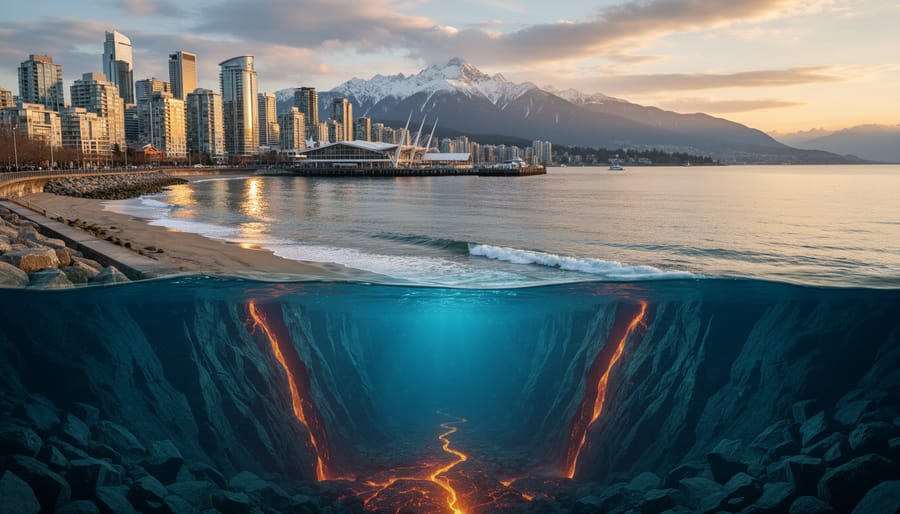
Right under Vancouver, three huge pieces of Earth’s crust are meeting and moving. Imagine Earth’s surface is like a giant jigsaw puzzle with pieces that slowly shift around. These pieces are called tectonic plates, and Vancouver sits right where three of them come together!
The biggest player is the Juan de Fuca plate. This oceanic plate is sliding underneath another plate called the North American plate (that’s the one we’re standing on in Vancouver!). When one plate slides under another, it doesn’t happen smoothly. The plates get stuck, pressure builds up, and when they finally slip, boom!, we feel an earthquake.
There’s also the Pacific plate nearby, pushing and grinding against the others. All this movement happens incredibly slowly, about as fast as your fingernails grow, but the forces involved are enormous.
Try this: Press your palms together and slide one hand past the other while pushing hard. Feel how they stick and then suddenly slip? That’s similar to what tectonic plates do under Vancouver! That sticking and slipping is what causes the ground to shake.
These three plates meeting near Vancouver is why our city experiences seismic activity. The Juan de Fuca plate diving beneath the North American plate creates the Cascadia Subduction Zone, which we’ll explore more throughout this article.
Different Kinds of Seismic Events in Vancouver
Not all seismic activity in Vancouver feels the same. Some earthquakes are so gentle you might not notice them at all, while others can rattle dishes or make buildings sway. Let’s explore the different types of ground-shaking events that happen in Vancouver’s active seismic zone.
Scientists group seismic events by their strength and where they happen underground. Here are the main types Vancouver experiences:
- Micro-earthquakes: Tiny tremors too small to feel, but seismographs detect hundreds each year
- Small tremors: Gentle shaking you might notice if you’re sitting still, like a rumble under your feet
- Moderate quakes: Stronger shaking that rattles windows and makes hanging objects swing
- Deep earthquakes: Happen far underground (more than 30 kilometres down) and feel like a rolling motion
- Shallow earthquakes: Occur closer to the surface and create sharper, jerkier shaking
- Foreshocks: Smaller earthquakes that sometimes happen before a larger one
- Aftershocks: Follow-up tremors that occur after a bigger earthquake, like echoes of the main event
Think of it like waves at the beach. Some are tiny ripples, others are medium-sized splashes, and a few are big waves. Deep earthquakes feel different from shallow ones, just like diving deep in a pool feels different from splashing at the surface.
Most seismic activity in Vancouver consists of micro-earthquakes and small tremors that don’t cause any damage. Your house experiences dozens of these tiny movements every year without you even knowing. The larger, noticeable earthquakes happen less often, which is why scientists monitor them carefully. Understanding these differences helps everyone stay calm and know what to expect when the ground decides to wiggle.
How Scientists Monitor and Study Earthquakes
Scientists use special tools to watch and listen to the Earth, kind of like how a doctor uses a stethoscope to listen to your heartbeat. In Vancouver, these Earth scientists work every day to track seismic activity and keep everyone safe.
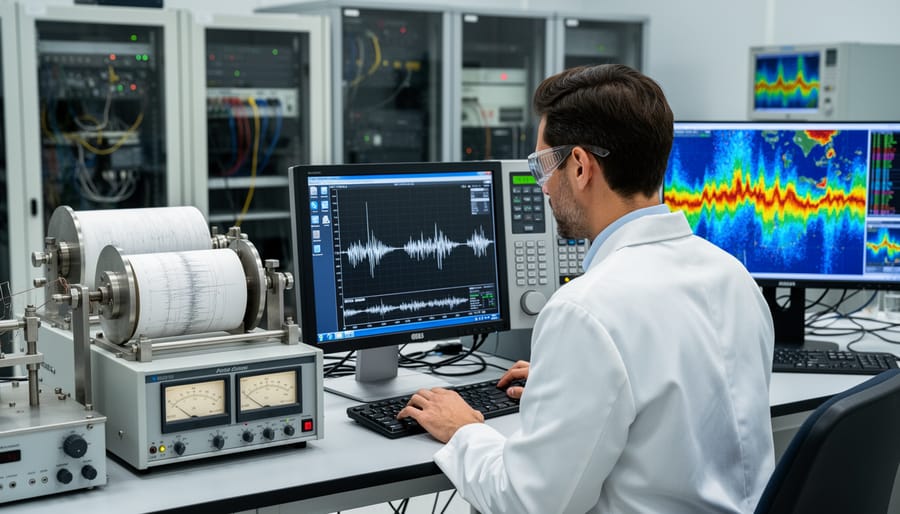
The main tool they use is called a seismograph. Imagine a machine with a pen that never stops drawing on a rolling piece of paper. When the ground shakes, even just a tiny bit, the pen wiggles and makes squiggly lines. The bigger the wiggle, the stronger the earthquake. Scientists read these squiggly lines like you might read a story, and they can tell how strong the shaking was and where it came from.
Vancouver has monitoring stations set up all around the area. These stations are like listening posts with super-sensitive ears pressed against the ground. They can feel vibrations that are way too small for people to notice. Some stations sit right in the city, while others are placed in the mountains and along the coast. They all send information to scientists who study the data on computers.
Scientists measure earthquake strength using something called the Richter scale or moment magnitude scale. Think of it like measuring temperature with a thermometer. A small tremor might be a 3, which most people would not even feel. A medium earthquake might be a 5, which would shake things around. Anything over 7 is very strong.
Can you imagine being an earthquake detective? Scientists in Vancouver are doing that job right now, watching the Earth’s movements 24 hours a day, seven days a week. They share what they learn to help builders make safer buildings and to teach people how to prepare.
Why Understanding Seismic Activity Matters
Studying earthquakes isn’t just about being curious, it helps keep people safe! When scientists understand how and why seismic activity happens in Vancouver, they can share that knowledge with builders, engineers, and city planners who design our homes, schools, and bridges.
Buildings in Vancouver are constructed to sway and bend during earthquakes rather than crack and fall. Engineers study how different tremors shake the ground, then create special designs that help structures survive strong shaking. Think of it like building with flexible straws instead of rigid sticks, the flexible ones bend but don’t break!
Understanding seismic activity also helps create early warning systems. These systems detect earthquake waves before they reach the city, giving people precious seconds to take cover. Those few seconds can save lives by allowing trains to slow down, surgeries to pause, and people to get under desks.
Scientists use their earthquake knowledge to teach communities how to prepare. They help families create emergency kits, schools practice safety drills, and neighborhoods plan how to help each other after a big quake. When everyone knows what to do, earthquakes become much less scary.
Vancouver’s location near tectonic plates makes it a natural earthquake laboratory. The more scientists learn here, the better they can protect not just Vancouver but other cities around the Ring of Fire too. Every tremor teaches us something new about keeping communities safe!
What Happens During an Earthquake?
When an earthquake happens, you might feel the ground move beneath your feet, sometimes just a gentle wiggle, other times a stronger shake. The floor might seem to roll like waves in the ocean, or jolt side to side. You might hear creaking sounds as buildings sway slightly, and objects on shelves could rattle or even fall. Don’t worry, most of the time in Vancouver, these tremors are small and stop quickly without causing any harm.
During stronger shaking, windows might vibrate, lights could swing, and doors may open or close on their own. Scientists say that even when buildings sway a bit, that’s actually good, it means they’re designed to move safely with the earthquake instead of breaking. Vancouver’s modern buildings are built to protect people during seismic activity.
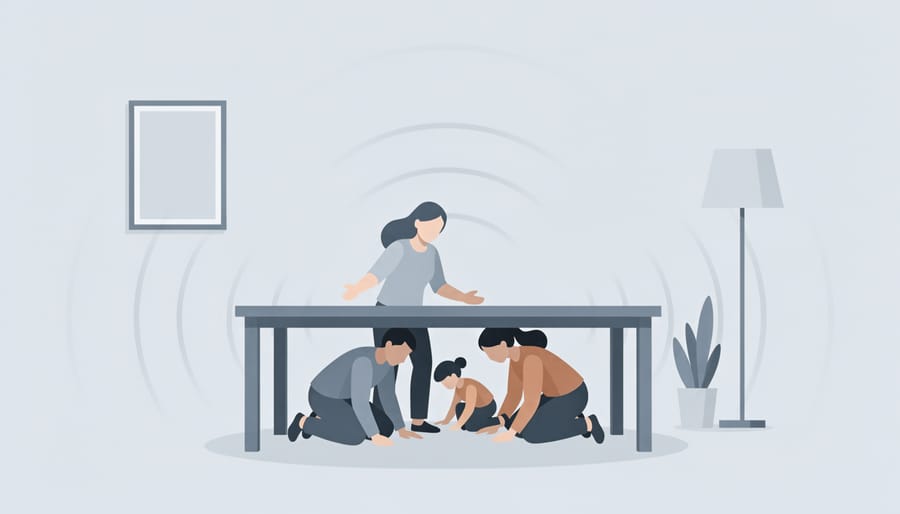
If you ever feel an earthquake, remember three important words: Drop, Cover, and Hold On. Drop down onto your hands and knees so you won’t fall. Cover your head and neck by getting under a sturdy table or desk. Hold On to your shelter until the shaking stops. If there’s no table nearby, cover your head with your arms and crouch against an inside wall away from windows.
It’s helpful to practice this drill at home or school, just like you practice fire drills. You can even make your own volcano experiment to learn more about how energy builds up inside Earth and gets released, similar to how earthquakes work.
Remember, most tremors you’ll feel are tiny, and scientists are always monitoring to keep everyone safe.
Common Questions About Vancouver’s Seismic Activity
Can scientists predict when an earthquake will happen?
Not yet! Scientists can tell us which areas are more likely to experience earthquakes, but they cannot predict the exact day or time one will strike. That’s why it’s so important to always be prepared, just like keeping an umbrella handy in rainy Vancouver.
Are small tremors dangerous?
Most small tremors are harmless and many are so tiny you won’t even feel them. Scientists record hundreds of small earthquakes around Vancouver every year, and they rarely cause any damage. Think of them as Earth’s little hiccups.
Does a small earthquake mean a big one is coming?
Not necessarily. Small tremors happen all the time as tectonic plates slowly shift and settle. While they can sometimes be foreshocks before a larger quake, most small earthquakes stand alone and don’t lead to anything bigger.
Is Vancouver prepared for a big earthquake?
Yes! Vancouver has strict building codes that require structures to withstand strong shaking. Schools practice earthquake drills, emergency teams train regularly, and scientists constantly monitor seismic activity to help keep everyone as safe as possible.
Understanding these common concerns helps families feel more confident about living in an active seismic zone. The key is staying informed without being scared. Vancouver’s location on the Pacific Ring of Fire means earthquakes are part of the natural environment, just like rain and mountains are part of the landscape.
Scientists continue learning more about seismic patterns every day. Their research helps improve early warning systems and building designs. By studying each tremor, whether tiny or noticeable, they gather valuable information that makes communities safer over time.
Seismic activity is a normal part of how our planet works, just like wind, rain, and sunshine. Because Vancouver sits near the edge of tectonic plates in the Pacific Ring of Fire, it’s one of the most exciting places in the world to learn about earthquakes and volcanology. Scientists monitor the ground carefully, study how plates move, and work hard to keep everyone safe through better buildings and warning systems.
Living in an active seismic zone might sound scary, but remember that most tremors are tiny and harmless. The more we understand about how Earth’s layers shift and shake, the better prepared we can be. You’ve learned a lot about tectonic plates, the Cascadia Subduction Zone, and why the ground sometimes rumbles beneath Vancouver.
Want to test your earthquake knowledge? Try drawing your own diagram of tectonic plates colliding, or challenge yourself with a quiz about the Ring of Fire. The Earth beneath your feet tells an amazing story!