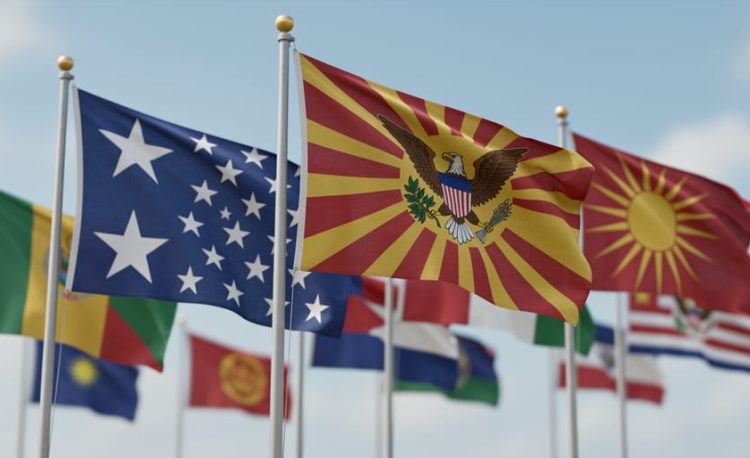
Universal symbols are pictures or shapes that people around the world can recognize and understand, no matter what language they speak. On flags, these symbols work like a secret code everyone knows. A star might stand for hope or guidance. A circle could represent unity or the sun. An eagle often means strength and freedom.
Why do countries put these symbols on their flags? Because flags need to tell a story fast. When you see a flag waving in the wind, you might only have a few seconds to look at it. The symbols chosen for flags communicate big ideas using simple pictures that billions of people already understand.
Think about it: Have you ever noticed that many flags use the same shapes, like stars, stripes, or animals? That’s no accident. These universal symbols appear on flags from countries thousands of miles apart because they tap into meanings that cross cultures and languages. A lion represents courage whether it’s on a flag in Europe, Africa, or Asia.
In this article, you’ll discover what makes a symbol universal, how these symbols work their magic on flags, and the different types of symbols countries love to use. You’ll also get to play detective, spotting these powerful symbols on flags from around the world. Ready to crack the code?
What Universal Symbols Really Mean
Think of a thumbs-up. No matter where you are in the world, whether you’re in Japan, Brazil, or Egypt, most people know it means “good job” or “I agree.” That’s exactly how universal symbols work on flags. They’re pictures or shapes that people everywhere can understand, even if they speak different languages or come from different cultures.
Universal symbols act like a visual language. Instead of using words that only some people can read, flags use images that nearly everyone recognizes. A star, a crescent moon, or a sun doesn’t need translation. Your eyes see the shape, and your brain instantly knows what it represents. This makes flags perfect for sharing a country’s message with the whole world at once.
- Universal Symbol
- A picture or shape that most people around the world recognize and understand without needing words to explain it.
- Icon
- A simple image that stands for a bigger idea, like how a heart shape represents love.
- Visual Language
- A way of communicating using pictures and shapes instead of spoken or written words.
When countries design their flags, they choose symbols that tell their story in this visual language. A mountain might show that a country has tall peaks. An eagle could represent strength and freedom. These aren’t just decorations, they’re messages that work across borders, connecting people who might never meet or speak the same language. The beauty of universal symbols is that they let flags communicate instantly, whether someone is standing close enough to touch the fabric or watching from across a stadium.
How Symbols Work on Flags
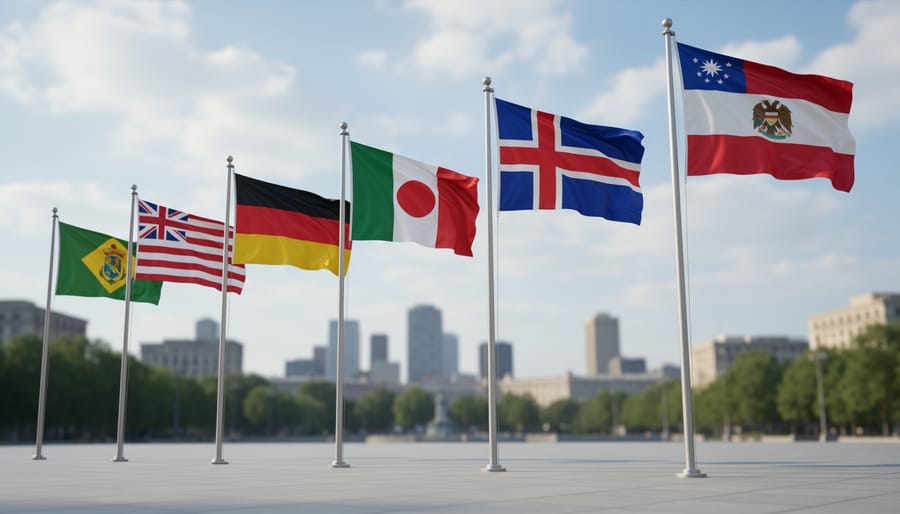
Why Pictures Beat Words
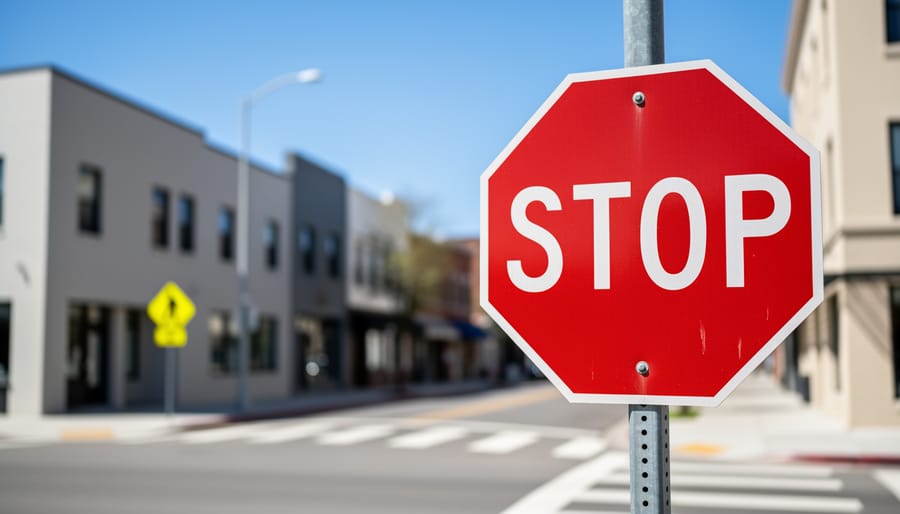
Imagine you’re riding your bike down the street and you see a big red octagon. Even if all the letters fell off, you’d know it means STOP, right? That’s because the shape and color do the talking. Flags work the same way.
Words only help people who can read that language. But a picture of a sun? Everyone gets it. A star? Kids in Kenya and kids in Canada both understand what it means. That’s why countries pick symbols instead of spelling out their name or writing long messages.
Think about it: flags fly high on poles, flutter in the wind, and hang far away from where you’re standing. Words would be too hard to read. But a bold shape or bright image? You can spot it from across a soccer field. Symbols shout their message loud and clear, no reading required.
The Power of Simple Shapes
Think about watching a flag flutter high on a flagpole. The wind makes it ripple and wave, but you can still tell which country it belongs to. That’s the magic of simple shapes!
Flags use basic shapes like stars, circles, and stripes because your brain can spot them in a flash. A complicated picture with lots of tiny details would turn into a blurry mess when the flag is flapping. But a bold stripe? You see it instantly. A big star? Your eyes catch it right away, even from far down the street.
Simple shapes also work when flags get smaller. Picture a tiny flag pin on someone’s jacket. If the design used fancy drawings, you couldn’t make out what they were. Stars and circles stay clear no matter the size.
Countries choose these basic shapes on purpose. They want everyone, whether you’re standing close or watching from across a soccer field, to recognize their flag without squinting or guessing.
Common Universal Symbols You’ll See on Flags
Stars: Hope and Unity
Stars shine bright on flags for good reason! Countries put stars on their flags to show hope for a better future, or to represent different states or regions coming together as one nation. Think about how stars in the night sky guide travelers, that’s the same feeling! The United States flag has 50 stars, one for each state working together. Some countries use a single big star to show unity, while others arrange multiple stars in special patterns. When you see stars on a flag, they’re usually celebrating teamwork, dreams, or the light that guides a nation forward. Count the stars next time you spot a flag, each one might have its own special meaning!
Sun and Moon: Nature’s Power
Flags often show the sun and moon because these symbols remind us of nature’s daily rhythm. The sun represents light, energy, and new beginnings, when you see a bright sun on a flag, the country might be saying “we’re a place of hope and growth.” The moon can symbolize peace, faith, or the passing of time. Some countries use a crescent moon to show their cultural heritage, while others combine sun and moon together to represent balance between day and night. These celestial symbols connect flags to Earth and space facts that everyone experiences, making them truly universal. Next time you spot a sun or moon on a flag, think about what message that country wants to share!
Animals and Plants: National Pride
Countries love putting animals and plants on their flags because these living things show what makes their land special. When you see an eagle, you know it stands for strength and freedom, that’s why the United States uses it. Canada’s maple leaf tells everyone about the beautiful trees that turn red and gold across their forests. Australia shows a kangaroo because you can only find these hopping animals there, making them perfect for representing their unique planet features.
These nature symbols connect a country’s flag to its real landscape. A cedar tree on Lebanon’s flag reminds people of the ancient forests that once covered their mountains. New Zealand’s silver fern represents a plant that grows wild in their rainforests. When countries pick animals or plants for their flags, they’re choosing something that lives in their home and matters to their people, it’s like wearing a badge that says “this is what grows here” or “this creature is part of our story.”
Crosses and Religious Symbols
Many countries put crosses, crescents, or other religious symbols on their flags to show what’s important to their people. A cross might appear because Christianity has been part of a nation’s story for hundreds of years. You’ll see crescents on flags from countries where Islam is central to daily life. These symbols aren’t there to tell anyone what to believe, they’re like family photos that remind people of their shared heritage.
When you spot a religious symbol on a flag, you’re seeing a piece of that country’s identity. The Swiss flag shows a white cross because it connects to their history of helping others. Some Nordic flags have crosses that reach all the way to the edges, linking them to their Viking past and Christian traditions. A crescent and star might represent faith, but also the moon’s light guiding travelers at night. Each symbol carries layers of meaning that grew over time, turning a simple shape into something the whole country recognizes as theirs.
How Countries Use Symbols to Tell Their Stories
Mixing Symbols Together
Countries often put more than one symbol on their flag to tell a richer story. Think of it like making a picture book, each symbol adds a new piece of information about what matters to that country.
Take Mexico’s flag, for example. It shows an eagle perched on a cactus, holding a snake in its beak. This isn’t random! The eagle represents strength and the country’s history. The cactus and snake together tell an ancient story about where Mexico City was founded. By combining these three symbols, Mexico creates one powerful image that shows both nature and national pride.
Portugal’s flag mixes a shield with stars, castles, and other shapes all working together. Each piece tells part of Portugal’s long history, from ancient kingdoms to ocean exploration. When you see multiple symbols on one flag, you’re looking at layers of meaning stacked together. Countries choose combinations that show what makes them unique, turning their flag into a complete visual story that everyone can understand at a glance.
When Colors Change Everything
The same symbol can tell completely different stories just by changing its color! A star might mean one thing in yellow and something totally different in red.
Take stars, for example. A red star on a flag often represents revolution or a fight for change. Countries like Vietnam and China use red stars to show their history of standing up for their people. But a yellow or gold star usually means something brighter, like hope, guidance, or achievement. The stars on the European Union flag are all gold to show unity and bright ideals working together.
Even simple stripes change meaning with color. Green stripes often stand for forests, farmland, or new growth. Blue stripes might represent oceans, rivers, or peaceful skies. Red stripes can mean courage or the blood of people who fought for freedom.
Colors work like flavors that change how we taste the same ingredient. A circle in white might mean peace, while the same circle in red could represent the sun or courage. When you look at flags, ask yourself: would this symbol mean something different in another color?
Try It Yourself: Spot the Symbols!
Ready to become a flag detective? Let’s put your symbol-spotting skills to the test with some fun challenges!
Challenge 1: Star Search
Look at the flags of the United States, Australia, and China. How many stars can you find on each one? What do you think those stars represent? (Hint: The U.S. has one star for each state!)
Challenge 2: Animal Hunt
Can you name three countries that have animals on their flags? Think about birds, lions, or even dragons! Each animal tells something special about that country’s story or strength.
Challenge 3: Color Detective
Find a flag with red, white, and blue. Now find another one with the same colors. Do they look exactly alike? Notice how countries use the same colors in different patterns to create their own unique identity.
Challenge 4: Sun Seeker
How many flags can you find with a sun symbol? Some show full circles, others show rays bursting outward. Countries like Japan and Argentina both feature the sun, but they use it in completely different ways.
Bonus Challenge: Nature Connection
Think about symbols from nature you’ve learned about in Earth Day facts. Can you spot any flags that celebrate plants, water, or landscapes? The cedar tree on Lebanon’s flag is a perfect example!
Grab some flags from books or online and start your symbol hunt today!
Questions Kids Ask About Flag Symbols
Do all countries use symbols on their flags?
Almost every country in the world uses at least one symbol on its flag! Even flags that look simple, like stripes or solid colors, use those shapes and colors as symbols themselves.
Can the same symbol mean different things?
Yes! A star might represent hope on one flag, the number of states on another, and religious belief on a third. The colors around it and the country’s history change what the symbol means.
Who decides what symbols go on a flag?
Usually the country’s government or leaders choose the symbols when designing a new flag. Sometimes they ask citizens to vote or submit ideas, especially when a country becomes independent.
Can the same symbol appear on many different flags?
Absolutely! Stars appear on more than 60 flags around the world. Crosses, suns, and moons show up on many flags too, each telling a different national story.
What’s the most popular symbol on flags?
The star wins as the most common symbol! You’ll find stars on flags from the United States to Australia to many countries in Africa and Asia.
How old are the symbols we see on flags today?
Some symbols are thousands of years old! Humans have used stars, suns, and animals to represent ideas since ancient times. Modern flags borrowed these timeless symbols because people already understood what they meant.
These questions show how curious kids think about the world around them. When you start noticing flag symbols, you might come up with even more questions! The important thing is that you’re learning to read the visual language countries use to share their stories. Just like kids help the planet by learning about the environment, you’re helping yourself understand global cultures by discovering what their symbols mean. Every flag you see becomes a puzzle you can solve once you know what to look for.
Now you know the secret language of flags! Every time you see a flag waving in the wind, remember that its symbols are telling a story without using any words at all. That star might represent hope for the future. The sun could mean a fresh start. An animal might show what makes that country special and strong.
Universal symbols work like magic, they help countries share who they are with everyone around the world, no matter what language people speak. A child in Japan can understand the same symbol as a child in Brazil or Kenya. That’s the amazing power of pictures and shapes working together.
Next time you spot a flag, take a moment to look closely. What symbols do you see? What story might they be telling? You’re now a flag detective, and every banner has clues waiting to be discovered.
Want to learn more cool facts about countries, maps, and the world around you? Explore our other geography articles and become an expert on how our planet works. There’s always something new to discover!