
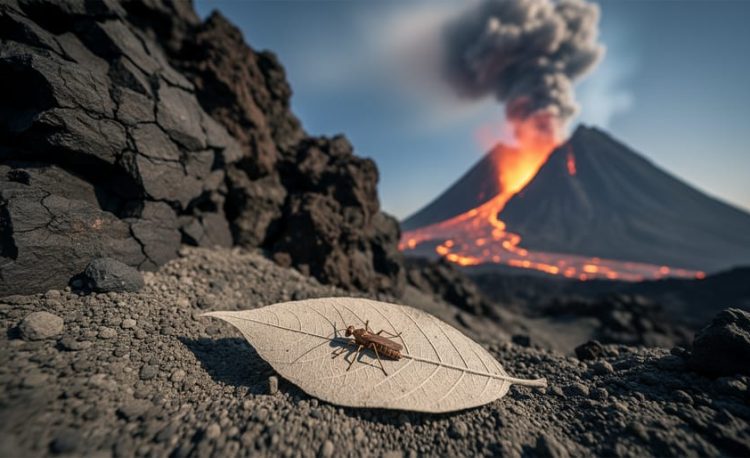
Volcanoes create fossils in three surprising ways: by burying ancient life in ash, forming volcanic rock molds of plants and animals, and building new rock layers that help scientists figure out how old fossils really are. These fiery mountains might seem like destroyers, but they’re actually some of nature’s best fossil-makers! When a volcano erupts, it can freeze moments in time, protect delicate traces of life, and give us clues about creatures that lived millions of years ago.
Have you ever wondered how a fiery explosion could help preserve something as fragile as a leaf or an insect? The secret is in how quickly volcanic materials work. Think of it like making a plaster cast of your hand, except nature does it with hot ash and flowing lava instead of classroom supplies.
Volcanoes don’t just create dramatic explosions and rivers of glowing lava. They’re actually incredible time machines that let us peek into Earth’s ancient past. The ash, lava, and rocks they produce can trap and protect living things, turning them into fossils that tell stories about what our planet looked like long before humans walked around. Scientists who study these volcanic fossils can learn what kinds of plants grew near ancient volcanoes, which animals lived there, and even what the weather was like.
Ready to discover the three amazing ways volcanoes help create fossils? Let’s explore how these powerful forces of nature work as Earth’s own fossil factory!
Why These 3 Facts Matter
We picked these three volcano facts because they show the most amazing ways volcanoes and fossils work together! These aren’t just random facts, they’re the key connections that help you understand how ancient plants and animals got preserved in rock. When you learn how volcanic ash, lava, and rock layers create fossils, you’re discovering important secrets about Earth’s history. These volcano facts make physical geography easier to understand because they show how our planet changes and preserves life over millions of years. Ready to become a volcano and fossil detective?
1. Volcanic Ash Acts Like a Time Capsule for Ancient Life
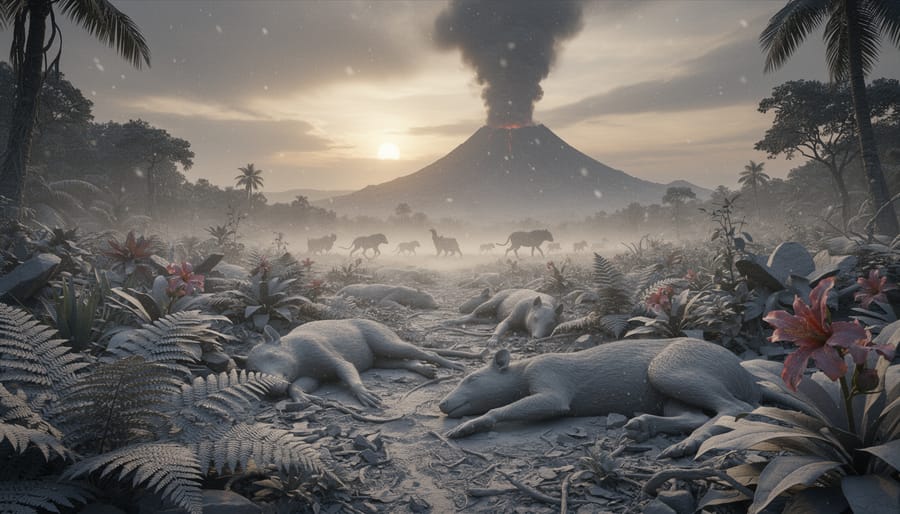
When a volcano erupts, one of the most amazing things it does is shoot out clouds of fine ash high into the sky. This ash is made of tiny bits of rock and volcanic glass, and when it falls back down to Earth, it can cover everything like a soft, heavy blanket. If plants, animals, or insects happen to be in the area, the ash buries them quickly, sometimes in just hours or days. That’s the first of our volcano facts about fossils: volcanic ash acts like a time capsule, wrapping up ancient life and keeping it safe for millions of years.
Think about wrapping a birthday present. You carefully fold the paper around it to protect what’s inside, right? Volcanic ash works in a similar way. When it covers a plant or animal, it seals out air, water, and tiny organisms that would normally make things rot and disappear. Without air and moisture, the buried organism doesn’t decay. Instead, over time, minerals from the ash seep into the organism’s body, turning it into stone, a fossil. The ash preserves even tiny details like leaves, feathers, and insect wings.
Scientists love finding fossils in volcanic ash because they’re often incredibly detailed and well-preserved. The ash captures a snapshot of life exactly as it was at that moment in time. What would you want preserved in volcanic ash if you could choose? Maybe your favourite toy, a drawing you made, or a leaf from your backyard? That’s how paleontologists feel when they discover these ancient treasures frozen in time.
2. Lava Creates Special Molds and Casts of Living Things
Have you ever pressed your hand into play dough and watched the shape stay there after you lift your hand away? That’s exactly how lava creates fossil molds! When a volcano erupts, super-hot lava sometimes flows around plants, trees, shells, or even animal tracks. The lava is so hot that it destroys the living thing, but it leaves behind a perfect hollow shape, that’s called a mold. Think of it like the play dough handprint, where the space shows the exact outline of what was there. When the hollow mold later fills with minerals or more rock, it creates a cast, a solid copy of the original shape. Imagine filling your play dough handprint with plaster; when it hardens, you’d have a perfect model of your hand!
Lava molds and casts have helped scientists discover all sorts of ancient life:
- Tree trunks that show the bark patterns from millions of years ago
- Animal footprints frozen in time, revealing how dinosaurs walked
- Shells from ancient sea creatures that lived near volcanoes
- Entire forests preserved as stone copies of the original trees
The most famous example is in Pompeii, Italy, where volcanic ash and flows preserved the shapes of people and buildings from nearly 2,000 years ago. What would you like to make a fossil mold of, your favorite toy, a leaf from your backyard, or maybe your pet’s paw print? Next time you play with clay or play dough, try making your own molds and casts to understand how volcanoes work as nature’s fossil makers!
3. Volcanoes Help Date Fossils by Creating Rock Layers
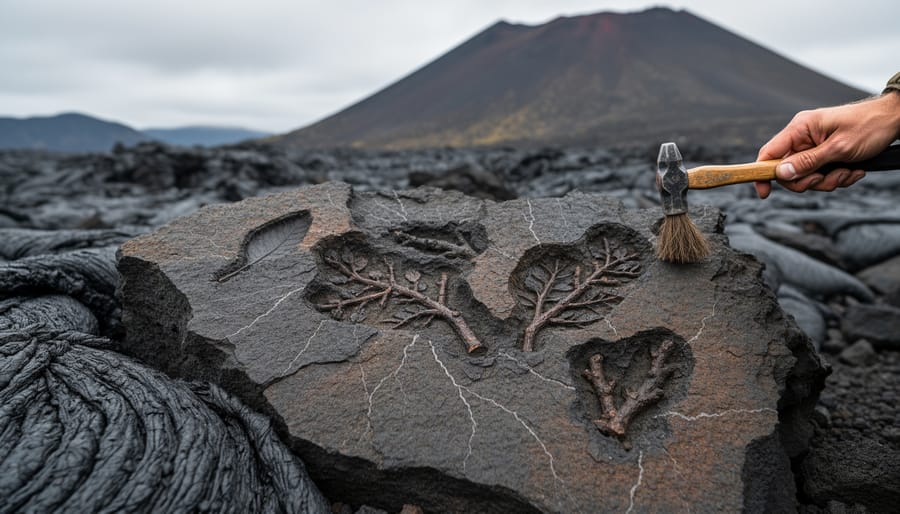
When a volcano erupts, it doesn’t just create a spectacular show of fire and ash, it also adds a brand new layer of rock to Earth’s surface. Think of these volcanic rock layers like the layers in a birthday cake, where each layer represents a different celebration. Scientists use these layers as a natural calendar to figure out how old fossils are. If they find a fossil between two volcanic layers, they can test the volcanic rock above and below it to discover when each eruption happened, which tells them the fossil’s age range.
This dating method works because volcanic rock contains special minerals that scientists can measure in laboratories. When you find a dinosaur bone sandwiched between two volcanic layers, you know the dinosaur lived sometime between those two eruptions. Just like you can look at different country facts to learn about places around the world, scientists look at different rock layers to learn about times in Earth’s history.
Can you imagine stacking up all the volcanic layers from millions of years? Each eruption adds another stripe to Earth’s timeline, creating a striped pattern in cliffs and mountains that tells the story of our planet’s past. Next time you see layered rocks on a hillside, you’re looking at Earth’s own history book, with each layer marking a moment frozen in time.
Try This at Home: Volcano and Fossil Fun
Ready to become a volcano scientist at home? Grab some baking soda, vinegar, and small toys or leaves from your garden. First, place your toy dinosaur or leaf in a shallow dish and sprinkle baking soda around it like falling ash. Ask an adult to help you slowly pour vinegar over the baking soda, watch it fizz and bubble like a real eruption! Once it stops fizzing, let everything dry completely overnight. The next day, carefully brush away the dried mixture to reveal your “fossil” underneath, just like real paleontologists do. This fun experiment shows exactly how volcanic ash buries and preserves ancient life, bringing the 3 volcano facts you’ve learned to life. After trying this activity, test your new knowledge with our geography trivia to see how much you’ve discovered about Earth’s amazing volcanic powers!
Common Questions About Volcanoes and Fossils
Do all volcanoes make fossils?
No, not every volcano creates fossils. Fossils only form when volcanic ash or lava buries plants or animals at just the right time, and then those remains get preserved instead of rotting away. It’s like a lucky accident that doesn’t happen with every eruption!
Can fossils survive inside hot lava?
Actually, the super-hot lava usually burns up anything it touches completely. But fossils form when lava cools quickly around something, creating a mold, or when volcanic ash gently covers organisms before the heat reaches them. Think of it like making a pancake, the batter needs to cool to keep its shape!
Where can I see volcano-made fossils?
You can find these special fossils in museums around the world, especially in places near old volcanoes. Some famous examples come from Pompeii in Italy, where volcanic ash preserved an entire ancient city. Check if your local natural history museum has a volcano or geology section!
How long does it take for volcanic ash to make a fossil?
Fossils don’t form overnight. After volcanic ash buries something, it takes thousands or even millions of years for minerals to slowly replace the original material and turn it into stone. That’s why the fossils we find today are from creatures that lived a very, very long time ago!
These questions help you understand the three volcano facts we’ve explored. Remember, volcanoes are powerful Earth events that sometimes create amazing snapshots of ancient life. Every fossil tells a story about what our planet was like long before humans walked the Earth!
Now you know 3 amazing volcano facts about how these fiery mountains help create the fossils we find today! Remember: volcanic ash works like nature’s bubble wrap, lava makes cool fossil molds and casts, and volcano layers help scientists figure out how old fossils are. Pretty incredible, right?
Earth is like a giant science lab that’s always changing and creating new surprises. Every time a volcano erupts somewhere in the world, it might be preserving plants and animals for future scientists (like you!) to discover.
Want to learn more cool stuff about volcanoes and fossils? Our website has tons of fun articles waiting for you to explore. Keep asking questions, stay curious, and who knows? Maybe one day you’ll discover an amazing fossil that was created by a volcano millions of years ago. You’re already thinking like a young Earth scientist!